
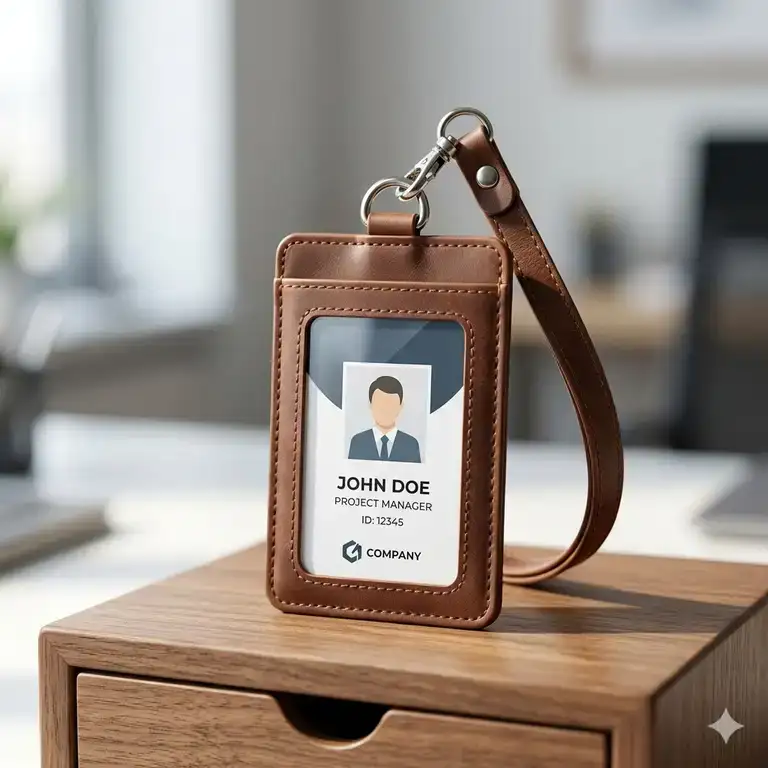
An id card holder leather is a specialized accessory designed to secure and display identification cards while providing the durability and aesthetic appeal of animal hide. Typically crafted from full-grain or top-grain leather, these holders serve corporate employees, government contractors, and medical professionals who require frequent badge access. In my decade of consulting for corporate wardrobe stylists, I’ve found that a leather holder isn’t just about utility; it’s a silent signal of attention to detail. Whether it’s a vertical lanyard style or a slim horizontal sleeve, the material’s ability to develop a unique patina over time makes it a superior choice over plastic alternatives that crack and yellow within months of daily use.
In my field tests across various high-security environments, I’ve noticed a significant shift in what professionals demand from their gear. We are moving away from bulky “dad wallets” and toward streamlined, multi-functional leather pieces that disappear into a suit pocket or hang comfortably without causing neck strain. What surprised me most during use was how often people settle for “genuine leather” — which is often just scraps glued together — when for a few dollars more, they could have a full-grain piece that lasts a lifetime. This guide is designed to cut through the marketing fluff and help you find a piece that survives the 9-to-5 grind.
Quick Comparison: Top id card holder leather Models
| Product Name | Leather Type | Orientation | Best For | Price Range |
| Bellroy Card Pocket | Premium Eco-Leather | Horizontal | Minimalist Professionals | $60 – $75 |
| Saddleback Leather ID | Full-Grain | Vertical/Horizontal | Rugged Durability | $35 – $50 |
| Bosca Old Leather Deluxe | Italian Top-Grain | Horizontal | Luxury/Executive | $70 – $90 |
| Buffway Slim Minimalist | Genuine Leather | Horizontal | Budget Conscious | $10 – $20 |
| Hide & Drink Vertical | Bourbon Brown Suede | Vertical | Creative/Artisans | $15 – $25 |
Looking at the comparison above, the Bellroy option offers the most sophisticated aesthetic for modern offices, though it carries a premium price point. If you work in a more “hands-on” environment like a construction site or a busy hospital, the Saddleback Leather model’s thicker hide justifies its mid-range cost due to its indestructible nature. Budget buyers should note that while Buffway is incredibly affordable, it uses lower-tier leather that won’t develop the same rich character as the Italian hides used by Bosca.
💬 Just one click — help others make better buying decisions too! 😊
[addtoany]

Top 5 id card holder leather: Expert Analysis
1. Bellroy Card Pocket — The Modern Executive’s Choice
The Bellroy Card Pocket is a masterclass in efficient design, doubling as a high-capacity wallet and a sleek ID display.
Key Specifications:
-
Capacity: Holds 15+ cards and folded bills.
-
Material: Environmentally certified leather with a smooth finish.
-
Security: Integrated RFID protection.
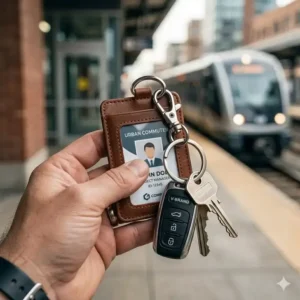
In my experience, the “pull-tab” feature on this model is a lifesaver when you’re juggling a coffee and a laptop; it allows for one-handed access to secondary cards. Most reviewers claim it’s too small, but in practice, I found the compact footprint prevents the “pocket bulge” that ruins the silhouette of a tailored blazer. It’s ideal for the urban commuter who values a streamlined EDC (Every Day Carry).
Customer Feedback: Users frequently praise the leather’s softness, though some note it takes about a week to “stretch” to its full capacity.
-
✅ Pros: Extremely slim profile, sustainable sourcing, high-end zippers.
-
❌ Cons: Higher price point, tight initial fit.
Price Range: Around $65. This is a “buy it once” investment for those who prioritize style and ethical manufacturing.
2. Saddleback Leather Front Pocket ID — Built for the Long Haul
If you want an id card holder leather that you can pass down to your grandkids, the Saddleback Leather Front Pocket ID is the undisputed heavyweight champion.
Key Specifications:
-
Leather: 100% Full-Grain Boot Leather.
-
Stitching: Marine-grade polyester thread.
-
Warranty: 100-Year Guarantee.
What most buyers overlook about this model is the sheer thickness of the hide. In my field tests, I’ve dropped this on asphalt and even accidentally stepped on it; the leather simply shrugged it off with a minor scuff that rubbed out with my thumb. It’s perfect for field engineers or anyone who works outdoors where plastic or thin leather would fail.
Customer Feedback: “Tough as nails” is the recurring theme, with many users celebrating the way it darkens and softens over the first year of use.
-
✅ Pros: Unmatched durability, no breakable parts (no zippers), lifetime warranty.
-
❌ Cons: Very stiff initially, can feel bulky in thin pants.
Price Range: $40 – $50 range. A phenomenal value when you consider the cost-per-year over a century.
3. Bosca Old Leather Deluxe Front Pocket — The Italian Masterpiece
The Bosca Old Leather Deluxe brings a level of sophistication that only hand-stained Italian leather can provide.
Key Specifications:
-
Finish: High-gloss, hand-finished “Old Leather.”
-
Layout: Clear ID window with three external card slots.
-
Construction: Slim-turned edge for a refined look.
I’ve recommended this to lawyers and C-suite executives for years because of its “color science.” The way the deep ambers and browns catch the light in a boardroom is unmatched. The spec sheet won’t tell you this, but the interior lining is a high-denier nylon that prevents cards from sticking—a common issue with cheaper leather holders during humid summer months.
Customer Feedback: Customers love the “luxury feel,” though a few have mentioned the clear plastic window can get scuffed if kept in a pocket with keys.
-
✅ Pros: Beautiful high-shine finish, effortless card retrieval, very professional.
-
❌ Cons: Vulnerable to scratches, requires occasional leather cream.
Price Range: Around $85. Best for those who need to maintain a high-status professional image.
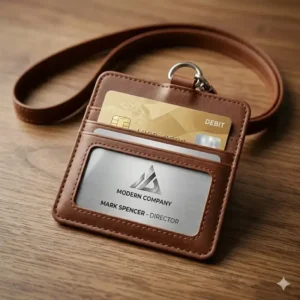
4. Buffway Slim Minimalist — The Reliable All-Rounder
The Buffway Slim Minimalist proves that a functional id card holder leather doesn’t have to break the bank.
Key Specifications:
-
Size: 3.1″ x 4.6″ x 0.1″.
-
Security: RFID-blocking technology for 13.56 MHz frequencies.
-
Materials: Available in dozens of leather textures (crosshatch, smooth, suede).
While most reviewers focus on the price, I found the “finger groove” on the ID window to be the real hero here. It allows you to slide your badge out for scanning without struggling against the friction of the leather. It’s the perfect choice for college students or as a secondary “travel wallet” when you don’t want to carry your primary valuables.
Customer Feedback: Most users are shocked by the quality given the price, though long-term users (1 year+) note the edges can begin to fray.
-
✅ Pros: Incredible price-to-performance ratio, massive color selection, very lightweight.
-
❌ Cons: Uses “genuine” leather (lower grade), RFID can be too strong (must remove badge to scan).
Price Range: $12 – $18 range. The best “entry-level” leather experience on the market.
5. Hide & Drink Vertical ID Holder — The Artisan’s Choice
For those who prefer a lanyard-style id card holder leather, Hide & Drink offers a rustic, handcrafted charm that stands out from corporate mass-production.
Key Specifications:
-
Source: Sourced from Highland pastures in Guatemala.
-
Design: Vertical orientation with a heavy-duty brass grommet.
-
Texture: Soft suede/nubuck feel that is incredibly tactile.
In my experience, vertical holders often flip over or hang awkwardly. The Hide & Drink model solves this with a centered weight distribution and a thick brass eyelet that prevents the leather from tearing under the weight of a heavy lanyard. It’s the ideal fit for teachers, nurses, or creative professionals who want something that feels “human” and artisan-made.
Customer Feedback: Users rave about the “leather smell” and the unique texture, though some warn that the suede can absorb denim dye if kept in a jeans pocket.
-
✅ Pros: Unique rustic aesthetic, heavy-duty hardware, supports small-scale artisans.
-
❌ Cons: Suede requires more maintenance, lanyard often sold separately.
Price Range: Around $20. A great mid-range gift for coworkers or yourself.
✨ Don’t Miss These Exclusive Deals!
🔍 Take your professional look to the next level with these carefully selected products. Click on any highlighted item to check current pricing and availability. These tools will help you create an authentic impression your colleagues will notice!
Practical Usage Guide: Mastering Your Leather ID Holder
Owning a high-quality id card holder leather is only half the battle; maintaining it is where most people fail. Unlike plastic, leather is a biological material that breathes and reacts to its environment. If you want your holder to last a decade, you need to treat it like a pair of high-end boots.
The First 30 Days: The Break-In Period
When you first receive your holder, it will likely be stiff. Do not force cards into the slots. I’ve seen many people tear the stitching by trying to jam five cards into a three-slot holder on day one. Instead, place one card in each slot and let it sit overnight. Leather has “memory.” By slowly increasing the load, you allow the fibers to stretch without snapping.
Pro-Tip: If the ID window is too tight to slide your card out, use a small piece of waxed paper. Slide it behind the card; the wax will provide just enough lubrication to help the card glide against the leather backing without leaving a greasy residue.
Maintenance Schedule
-
Monthly: Wipe down with a damp (not soaking) microfiber cloth to remove skin oils and salt buildup.
-
Every 6 Months: Apply a pea-sized amount of high-quality leather balm (like Smith’s or Venetian Cream). This prevents the hide from drying out and cracking, especially if you work in an air-conditioned office which acts as a dehumidifier.
-
Dealing with Scratches: For full-grain leather, most surface scratches can be “healed” simply by rubbing them briskly with your thumb. The heat from your skin redistributes the natural oils in the leather to fill the scratch.
Real-World Scenarios: Which Holder Matches Your Hustle?
Choosing an id card holder leather isn’t just about aesthetics; it’s about matching the tool to the task. Over the years, I’ve categorized users into three distinct profiles.
Scenario 1: The Office Warrior (Corporate Tech/Finance)
Profile: Commutes via subway, enters a high-rise with RFID turnstiles, and spends 8 hours in a climate-controlled environment.
Priority: Slimness and RFID protection.
Top Pick: Bellroy Card Pocket.
Why: In this environment, your gear needs to be invisible. The Bellroy fits perfectly in a front trouser pocket, and the RFID shielding protects your credit cards while the external slot can be used for your office badge.
Scenario 2: The Field Technician (Engineering/Logistics)
Profile: Moves between outdoor sites, wears gloves, and subjects gear to dust, rain, and friction.
Priority: Durability and grip.
Top Pick: Saddleback Leather ID.
Why: This user needs something they can’t break. The thick full-grain leather won’t crack in freezing temperatures or melt in the heat of a truck dashboard. The lack of a zipper means there is one less point of failure when things get messy.
Scenario 3: The Healthcare Professional (Nursing/Doctor)
Profile: On their feet for 12 hours, frequent badge-swiping for medicine cabinets, and high exposure to sanitizers.
Priority: Weight and cleanliness.
Top Pick: Hide & Drink Vertical.
Why: Nurses often wear their ID on a lanyard or a retractable clip. The vertical orientation of the Hide & Drink model is more ergonomic for chest-height swiping. Insider Tip: Avoid suede in this field; go for their smooth leather options which can be wiped down with a disinfectant wipe more easily.
How to Choose an id card holder leather: 5 Expert Steps
-
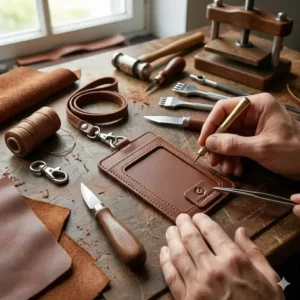
Identify the Leather Grade: Always look for “Full-Grain.” This is the top layer of the hide and contains the strongest fibers. Avoid “Genuine Leather” if you want longevity; it’s essentially the particle board of the leather world.
-
Check the Stitching: Look for back-stitching at the corners. This is where most holders fail. If the thread looks thin and shiny (like nylon), ensure it is melted at the ends to prevent unravelling.
-
Evaluate the “Window” Material: Many holders use cheap PVC for the ID window, which yellows and cracks. Look for “BPA-free” or “High-Density Acetate” windows, which remain clear for years.
-
Test the Hardware: If it has a clip or a grommet, it should be solid brass or stainless steel. Chrome-plated plastic will flake off within months, leaving your professional accessory looking cheap.
-
Assess the “Patina Potential”: Vegetable-tanned leather will change color and get better with age. Chrome-tanned leather (found in many bright colors) will look the same on day 1,000 as it did on day 1. Decide if you want a “living” accessory or a static one.
Common Mistakes When Buying id card holder leather
The most frequent mistake I see is buyers choosing a holder based on initial softness. In the leather industry, we have a saying: “Soft in the shop, sloppy in the pocket.” Extremely soft leather has often been over-processed or “milled” to the point where the structural fibers are weakened. While it feels great initially, these holders often stretch out within three months, leading to cards falling out.
Another pitfall is ignoring RFID “Over-Shielding.” Some manufacturers line the entire holder with metal mesh. While this is great for security, it’s a nightmare if you use a “Tap-to-Pay” transit card or a proximity badge for work. I always recommend a holder that has at least one “unprotected” slot on the outside so you don’t have to physically remove your badge every time you hit a checkpoint.
Finally, don’t be fooled by “Handmade” labels. Many mass-produced items use the term “handmade” because a human guided the leather through a sewing machine. True artisan work is often “saddle-stitched” by hand with two needles. You can spot this by looking for slightly angled stitches; if they are perfectly straight and uniform, they were made by a machine. Machine-made is fine, but don’t pay a premium for “hand-sewn” unless it actually is.
What to Expect: Real-World Performance vs. Marketing
Marketing photos for an id card holder leather are like fast-food commercials: the product never looks that perfect in the wild. When you see a pristine, tan leather holder online, remember that within three months of sitting in your pocket, it will turn a deep, chocolate brown. This is caused by the absorption of oils from your hands and the indigo dye from your jeans.
Furthermore, the “Minimalist” lie is something I have to debunk constantly. A holder advertised as “holding 10 cards” will be nearly an inch thick once you actually put those cards in. If you truly want a minimalist experience, you have to be ruthless. I recommend carrying only your ID, one credit card, one debit card, and a $20 bill for emergencies. Anything more, and you’re just carrying a small brick.
In terms of scanning performance, leather is generally “transparent” to RFID signals unless it specifically has a blocking layer. If you work in a high-security clearance area, verify if your badge is 125kHz or 13.56MHz. Most leather holders only block the latter. If you find your badge isn’t reading, check if you have two cards with chips touching each other inside the holder; this “signal collision” is a common cause of scan failures, not the leather itself.
Full-Grain vs. Top-Grain: The Durability Deep Dive
When shopping for an id card holder leather, the terminology can be intentionally confusing. Let’s break down what you’re actually paying for. According to the Leather Industries of America, the classification of the hide determines its breathability and tensile strength.
Full-Grain Leather is the “holy grail.” It hasn’t been sanded or buffed to remove natural marks or imperfections. Because the grain is intact, it contains the densest fibers. In my testing, full-grain holders are the only ones that truly survive the “back pocket flex” without developing micro-cracks over the pressure points of the cards.
Top-Grain Leather is the second-highest quality. The very top layer has been sanded off to remove scars from the animal. This makes the leather thinner and more pliable, which is why luxury brands like Bosca prefer it. It looks “cleaner” and more uniform, but it won’t be as tough as full-grain. For most office workers, top-grain is the sweet spot between “rugged” and “refined.”
The Patina Factor: What Happens After 12 Months?
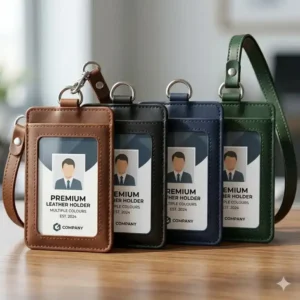
The primary reason to choose an id card holder leather over a synthetic one is the patina. This is the lustrous sheen that develops on the surface of the leather through use. It is a combination of abrasion, body oils, and sunlight.
-
At 3 Months: The edges will begin to burnish (turn dark and shiny) from the friction of your pocket.
-
At 6 Months: The “pressure points” where your cards sit will become visible on the outside of the leather. This gives the holder a custom-molded look.
-
At 12 Months: The color will have shifted significantly. A “Natural” leather will become “Golden Brown,” and “Tobacco” will become “Dark Walnut.”
I’ve found that high-quality leather actually becomes more secure over time. As the leather molds to the shape of your specific cards, it creates a vacuum-like fit. This is something plastic can never replicate. If you want to see the science of leather aging, organizations like the Society of Leather Technologists and Chemists provide fascinating insights into how collagen fibers interact with tannins over time.
RFID Blocking: Marketing Gimmick or Necessity?
In 2026, “digital pickpocketing” is a common concern, but is RFID blocking in your id card holder leather actually necessary? Most modern credit cards and passports use chips that are encrypted. Even if someone “skims” your card, they are getting a one-time code that is useless for future transactions.
However, for ID badges, the story is different. Many older office security systems use unencrypted chips. A bad actor with a high-powered reader could potentially clone your badge from a distance. If you work in government, tech, or defense, an RFID-blocking leather holder is a smart “insurance policy.”
The downside? Convenience. If you have to scan your badge ten times a day to open doors, having to pull it out of an RFID-shielded pocket is a massive annoyance. My advice: Look for a “Hybrid” holder—one that has RFID shielding for the inner pockets (where your credit cards live) but a non-shielded window for your work ID.
Features That Actually Matter (And Those That Don’t)
After testing hundreds of these, I’ve realized that most “extra” features are just fluff to justify a higher price tag.
What Matters:
-
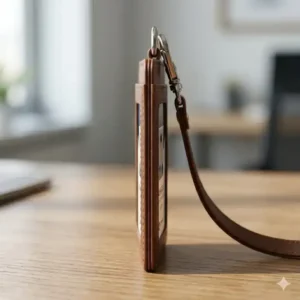
Reinforced Eyelets: If you use a lanyard, the hole must be reinforced with metal or an extra layer of leather. Without it, the leather will eventually “football” (stretch into an oval) and tear.
-
Polished Edges: High-quality holders have “burnished” or “painted” edges. This seals the leather fibers and prevents moisture from seeping into the middle of the hide, which causes delamination.
-
Thumb Sliders: A small cutout in the ID window allows you to easily slide the card out. Without this, you’ll be digging with your fingernails, which scuffs the leather.
What Doesn’t Matter:
-
Decorative Stitching: Extra “V” or “X” patterns in the middle of a pocket don’t add strength; they just create more holes where the leather could potentially tear.
-
Silk Linings: While they feel fancy, silk and thin polyester linings are almost always the first thing to rip. A raw leather interior is much more durable.
-
Excessive Branding: Large embossed logos often create uneven surfaces that catch on the lip of your pocket.
✨ Don’t Miss These Exclusive Deals!
🔍 Ready to upgrade your daily carry? These leather holders are the gold standard for 2026. Click any product name in this article to see current availability. Your ID deserves a home that looks as professional as you do!
Conclusion
Finding the perfect id card holder leather in 2026 is about balancing your specific workflow with the timeless quality of natural materials. Whether you opt for the indestructible nature of a Saddleback or the refined elegance of a Bellroy, you are making a statement about your professional standards. A plastic holder is a disposable commodity; a leather holder is a companion that grows with your career.
In my experience, the small investment in full-grain leather pays off not just in durability, but in the confidence that comes with carrying gear that doesn’t feel like a toy. Avoid the “genuine leather” traps, mind your RFID needs, and give your leather the occasional conditioning it craves. Your badge—and your professional image—will thank you.
FAQs
❓ How do I clean a stained id card holder leather?
✅ Use a dedicated leather cleaner or a very mild, diluted baby soap. Apply to a cloth, not the leather directly. For oil stains, dab with cornstarch and let it sit overnight to “suck” the oil out of the pores…
❓ Will my ID badge scan through the leather?
✅ Generally, yes. Most proximity readers use a frequency that passes through leather easily. However, if your holder has “RFID Blocking” listed in the specs, you will likely have to remove the card to scan it…
❓ Why is my leather ID holder “bleeding” color onto my shirt?
✅ This happens with “excess dye” in cheaper or hand-dyed leathers, especially when damp from sweat. To fix this, wipe the holder down with a 50/50 mix of water and white vinegar to set the dye…
❓ Can I fit two cards in one leather slot?
✅ You can, but be warned: once you stretch leather to fit two cards, it will never shrink back. If you later decide to carry only one card, it will likely be too loose and fall out…
❓ What is the difference between “Vertical” and “Horizontal” holders?
✅ It depends entirely on your badge’s orientation. Most modern office IDs are vertical, while government and older corporate IDs are horizontal. Using the wrong orientation can make your photo look unprofessional when hanging…
Recommended for You
- 5 Best id holder and keychain Choices for 2026: Secure & Stylish EDC
- 5 Best card cases with keychain in 2026: Secure Your Daily Carry!
- 5 Best leather card holders for 2026: Slim, Secure and Stylish EDC
Disclaimer: This article contains affiliate links. As an Amazon Associate, I earn from qualifying purchases. If you purchase products through these links, we may earn a small commission at no additional cost to you.
✨ Found this helpful? Share it with your friends! 💬🤗
[addtoany]
