
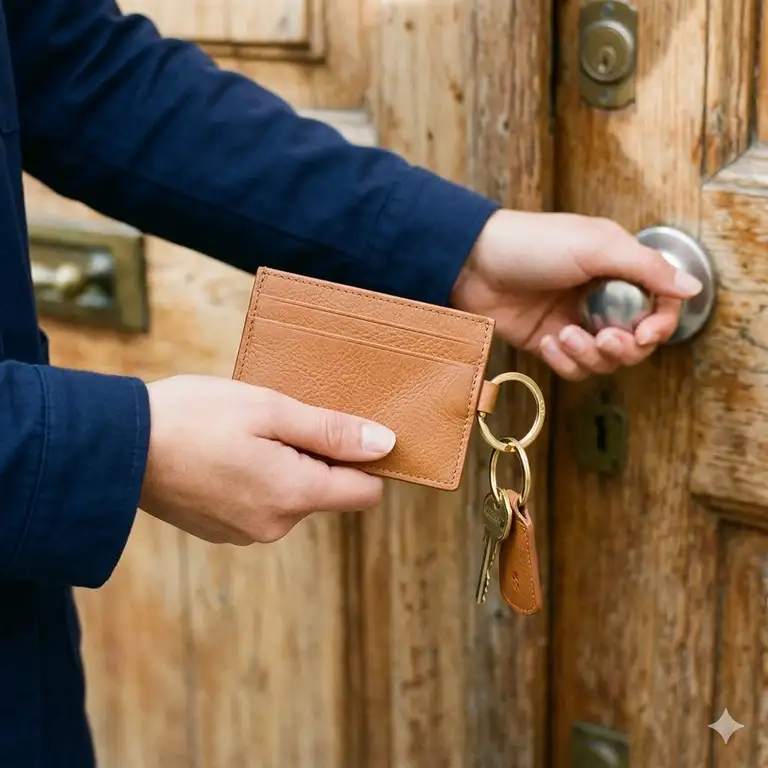
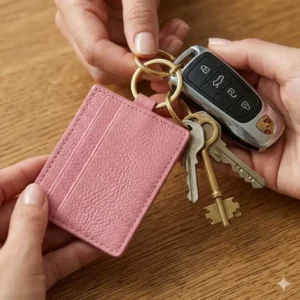
The “Costanza wallet” era is officially dead. In 2026, the movement toward streamlined, intentional living has transformed our pockets. We no longer carry stacks of paper receipts or a dozen loyalty cards we never use. Instead, the modern American professional and the weekend adventurer alike are turning to card cases with keychain attachments to consolidate their lives. But what exactly is a card case with keychain? Simply put, it is a compact, often RFID-shielded sleeve designed to hold 2–8 essential cards and a small amount of cash, equipped with a secure ring or clip to attach to your keys, lanyard, or bag.
The beauty of these hybrid accessories lies in their efficiency. By merging your wallet with your keys, you eliminate one of the most common “morning scrambles”—the frantic search for either the car keys or the debit card. According to research on consumer behavior from Harvard Business Review, reducing minor daily friction points significantly lowers stress levels. I’ve personally found that shifting to a unified carry system prevents that annoying “pocket bulge” that ruins the silhouette of a sharp pair of trousers. This guide will dive deep into the elite options available on Amazon this year, analyzing them through the lens of durability, security, and real-world ergonomics.
Quick Comparison: Top Card Cases for the Modern User
| Product Name | Primary Material | Card Capacity | Best Use Case | Price Range |
| Thread Wallets Slim | Elastic/Leather | 2-8 Cards | Active Lifestyle | $15-$25 |
| Chums Daily Wallet | Ripstop Nylon | 3-5 Cards | Outdoor/Rugged | $10-$20 |
| Vulkit Pop-Up | Aluminum | 5-7 Cards | Tech Enthusiasts | $25-$35 |
| Coach Corner Zip | Polished Pebble Leather | 2-4 Cards | High-End Fashion | $60-$85 |
| Vera Bradley ID Case | Recycled Cotton | 3-5 Cards | Students/Travel | $15-$28 |
Expert Analysis: When reviewing the data above, the Thread Wallets Slim offers the most versatile capacity-to-weight ratio for the average user. However, if you are frequently in wet or dusty environments, the Chums Daily Wallet justifies its place with superior material resilience. Those prioritizing security over aesthetics should lean toward the Vulkit Pop-Up for its rigid RFID protection.
💬 Just one click — help others make better buying decisions too! 😊
[addtoany]
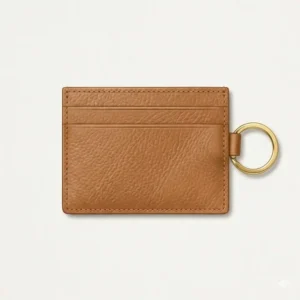
Top 5 card cases with keychain: Expert Analysis
1. Thread Wallets – Slim Minimalist Wallet
The Thread Wallets Slim Minimalist Wallet remains a titan in the minimalist community due to its unique elastic expansion.
Key Specifications & Practical Meaning:
-
Expansion Elastic Construction: This means the wallet grows or shrinks based on your load. Unlike leather, it won’t permanently stretch out if you carry six cards one day and two the next.
-
Reinforced Key Ring: The hardware is treated to resist the “opening” that often happens with cheap split rings. It stays closed even when loaded with heavy car fobs.
Expert Opinion: In my experience, this is the ultimate “gym to office” wallet. What most buyers overlook is the tension of the elastic; it’s tight enough that cards won’t slip out during a jog, yet the leather pocket provides a professional touch. It’s best for the “Active Minimalist” who needs their keys and cards to stay silent and secure during movement.
Customer Feedback Summary: Users consistently praise the vibrant designs and the longevity of the elastic tension, though a few note that the leather trim takes a few days to “break in.”
-
✅ Pros: Extremely low profile, hundreds of style options, very lightweight.
-
❌ Cons: Minimal cash storage, no RFID blocking.
-
Value Verdict: Around the $20 range, it’s a steal for the quality of hardware provided.
2. Chums Daily Wallet
For those who treat their gear with a bit of “tough love,” the Chums Daily Wallet is the undisputed heavy-duty champion.
Key Specifications & Practical Meaning:
-
Vanish Ripstop Nylon: This isn’t just fabric; it’s the same stuff used in high-end tents. It resists tearing and is easily washable if you drop it in the mud.
-
Internal Key Organizer: Unlike others that just have a ring on the outside, this allows you to tuck keys inside to prevent them from scratching your phone screen.
Expert Opinion: The spec sheet won’t tell you this, but the “stealth” factor of the Chums is its best feature. Because the keys can be tucked away, you don’t get that “janitor jingle” when walking. It’s the perfect choice for hikers or those working in industrial environments where exposed keys are a snag hazard.
Customer Feedback Summary: Outdoor enthusiasts rave about the dual-compartment design, though some city-dwellers find the aesthetic a bit too “utilitarian.”
-
✅ Pros: Water-resistant, internal key storage, highly durable zippers.
-
❌ Cons: Bulkier than elastic sleeves, industrial look.
-
Value Verdict: In the $12-$18 range, it offers the best protection-per-dollar ratio.
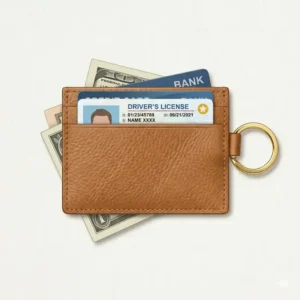
3. Vulkit Pop-up Card Holder with Keychain
The Vulkit Pop-up Card Holder is for the person who loves a mechanical “click” and high-tech security.
Key Specifications & Practical Meaning:
-
One-Click Trigger Action: With a flick of the bottom lever, your cards fan out. This eliminates the “digging” through a tight leather pocket at the checkout counter.
-
Aviation Grade Aluminum: This provides a hard shell that prevents cards from bending or snapping in your back pocket.
Expert Opinion: What most buyers overlook is the weight. Aluminum is light, but it’s still metal. If you attach this to your ignition, make sure your car’s ignition switch can handle the weight; otherwise, keep it clipped to a belt loop. It’s best for the tech-savvy professional who values RFID security and speed.
Customer Feedback Summary: Reviews highlight the “fidget-friendly” mechanism and the sleek metallic finish, with many noting it’s a great conversation starter.
-
✅ Pros: Instant card access, 100% RFID blocking, crush-proof.
-
❌ Cons: Heavier than fabric, limited to 5-6 cards max.
-
Value Verdict: Around $30, it’s a premium investment for long-term card health.
4. Coach Boxed Corner Zip Wristlet
When the occasion demands elegance, the Coach Boxed Corner Zip Wristlet (often used as a high-capacity card case) fits the bill perfectly.
Key Specifications & Practical Meaning:
-
Polished Pebble Leather: This leather is “tumbled,” meaning it hides scratches and scuffs much better than smooth leather. It stays looking new for years.
-
Integrated Wristlet Strap/Keychain: The strap serves as a high-security attachment to your wrist, making it nearly impossible to “set down and forget.”
Expert Opinion: This isn’t just a brand name play. The stitching density on Coach products in 2026 remains superior to “fast fashion” alternatives. If you’re someone who carries a few “emergency items” like a lip balm or a folded $20 bill alongside your cards, this extra volume is worth the price.
Customer Feedback Summary: Fans love the “luxury feel” and the fact that it fits larger key fobs inside the zipper pocket alongside the cards.
-
✅ Pros: Elegant aesthetic, high resale value, multi-functional.
-
❌ Cons: Most expensive on our list, too large for front pockets.
-
Value Verdict: $65-$85 range; it’s a “buy once, cry once” fashion staple.
5. Vera Bradley Zip ID Case
A classic that has been updated for 2026, the Vera Bradley Zip ID Case is the go-to for students and travelers.
Key Specifications & Practical Meaning:
-
Clear ID Window: You don’t have to take your license out to show it to security or a cashier. This reduces the risk of dropping or losing your primary ID.
-
Recycled Cotton Fabric: It’s soft and eco-friendly. Unlike plastic cases, it won’t crack in cold weather.
Expert Opinion: In my experience, the “secret sauce” here is the silver-tone key ring’s diameter. It’s slightly larger than standard, allowing you to clip it onto thick backpack straps or suitcase handles effortlessly. It’s best for college students who need quick access to their student ID and dorm keys.
Customer Feedback Summary: Users love the machine-washable nature and the cheerful patterns, though some wish the fabric was more water-repellent.
-
✅ Pros: Transparent ID slot, very lightweight, sustainable materials.
-
❌ Cons: Not RFID shielded, fabric can stain over time.
-
Value Verdict: Usually in the $15-$25 range, making it an affordable, high-utility gift.
✨ Don’t Miss These Exclusive Deals!
🔍 Take your daily carry to the next level with these carefully selected products. Click on any highlighted item to check current pricing and availability. These tools will help you create an organized life your future self will thank you for!
Transformation: Real-World Scenario Analysis
Choosing the right card cases with keychain isn’t just about the specs; it’s about how the product fits into your specific life rhythm. Let’s look at how different users should approach their purchase.
Scenario A: The Daily Commuter (Urban/Transit)
If you are navigating subways, buses, and city streets, your primary concern is security and speed.
-
The Choice: Vulkit Pop-Up.
-
Reasoning: You need to tap your transit card quickly without fumbling. The RFID protection is vital in crowded stations where “skimming” is a known risk. By clipping the keychain to an internal bag carabiner, you ensure that even if you’re jostled, your wallet stays tethered to you.
Scenario B: The Weekend Adventurer (Hiking/Gym)
When you’re active, you need minimal weight and moisture resistance.
-
The Choice: Chums Daily Wallet.
-
Reasoning: Sweating during a workout or getting caught in a rainstorm on a trail will ruin a leather Coach wristlet. The ripstop nylon of the Chums handles these elements with ease. Plus, the ability to zip your keys inside the case means they won’t jingle or poke you during a squat set or a steep climb.
Transformation: Practical Usage & Maintenance Guide
To get the most out of your card cases with keychain, you shouldn’t just “load and go.” Follow these optimization steps to ensure your gear lasts through 2026 and beyond.
1. The “Shake Test” Setup
When you first receive your card case, perform a shake test. Load your 3 most-used cards and hold the wallet upside down over a bed. Give it a firm shake. If the cards slide out, you need to add one “spacer” card (like a library card) to increase tension.
2. Avoiding “Key Dangle” Fatigue
If you attach your card case to your car’s ignition, the combined weight can wear out the ignition cylinder over time (a $500 repair!).
-
The Trick: Use a quick-release carabiner. Keep the cards and keys together in your pocket, but unclip the card case before putting the key in the ignition.
3. Cleaning Your Carry
-
Leather: Use a damp cloth once a month. Never use baby wipes; the alcohol dries out the leather fibers.
-
Fabric/Elastic: If it gets “pocket lint” buildup, use a piece of packing tape to lift the debris. For deep cleans, hand wash with mild dish soap and air dry—never put them in the dryer, as heat destroys elastic memory.
How to Choose card cases with keychain: The Expert Checklist
When shopping on Amazon, the sheer number of options can be paralyzing. Use these five criteria to filter out the “junk” from the “gems.”
-
Attachment Point Integrity: Look at the “O-ring” or loop. Is it a thin piece of fabric that will fray, or is it reinforced with a metal eyelet? In my experience, metal-reinforced loops last 3x longer.
-
Capacity vs. Bulk: Don’t buy a 10-card case if you only carry 3. Extra space leads to “card float,” where your cards aren’t held securely and can rattle or fall out.
-
Material “Hand-Feel”: If you’re sensitive to textures, avoid cheap “PU Leather” (polyurethane). It feels like plastic and peels within six months. Stick to genuine leather, high-grade elastic, or nylon.
-
Hardware Quality: Check if the zipper is a YKK brand. YKK zippers are the industry standard for a reason—they don’t “teeth-split” under pressure.
-
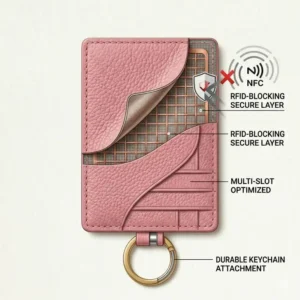
RFID Reality Check: Do you actually need RFID blocking? If you carry a “Tap-to-Pay” card, yes. If your cards are older “insert only” styles, RFID blocking is less critical but still a nice-to-have for future-proofing.
Common Mistakes When Buying card cases with keychain
The most frequent error I see is overestimating the keychain’s strength. Many buyers treat the keychain like a handle, swinging their wallet around. Most keychains are designed for tethering, not for high-torque swinging. If you plan to clip this to the outside of a backpack, ensure the clip has a locking gate.
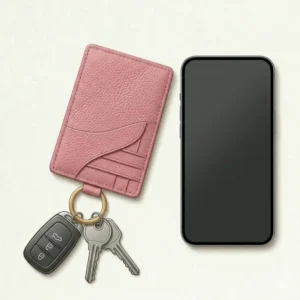
Another pitfall is ignoring the “Fob Factor”. Modern car fobs are massive. If your card case is too small, the fob will hang awkwardly, creating a lopsided weight distribution that makes it hard to fit into a pocket comfortably. Always check the dimensions to see if the case is wider than your largest key.
Material Science: Leather vs. Synthetic in 2026
In 2026, the debate between leather and synthetic materials has shifted toward sustainability and performance.
Leather (The Professional Standard)
-
Pros: It develops a “patina” (a unique sheen from use), it smells great, and it conforms to the shape of your cards.
-
Cons: It’s susceptible to water damage and can be heavier.
-
Analysis: If you’re in a corporate environment, leather is non-negotiable. It signals attention to detail.
Synthetic (The Performance Standard)
-
Pros: Usually vegan-friendly, lighter, and often more durable in extreme temperatures.
-
Cons: Can look “cheap” if not designed well; doesn’t have the same tactile “warmth” as leather.
-
Analysis: For students and athletes, synthetic is the winner. The ability to toss a Vera Bradley or Chums case into a washing machine after a messy commute is a massive practical advantage.
Benefits vs. Traditional Wallets: Why the Switch?
| Feature | Card Case w/ Keychain | Traditional Bifold |
| Pocket Footprint | Minimal (Front Pocket) | Large (Back Pocket) |
| Spine Health | No “Wallet Sciatica” | Causes Pelvic Tilt |
| Organization | Curated (Essentials Only) | Hoarding (Old Receipts) |
| Security | Tethered to keys/body | Easily slips out of pocket |
Analysis: The “Wallet Sciatica” mentioned above is a real medical concern documented by the American Chiropractic Association. Sitting on a thick bifold wallet for 8 hours a day misaligns the spine. Switching to a card case that fits in your front pocket is an investment in your long-term physical health, not just a fashion choice.
Long-Term Cost & ROI: The “Cost-Per-Carry” Analysis
When looking at a Coach case for $75 versus a generic $10 case, consider the ROI. A $10 case often uses “bonded leather” (essentially leather scraps glued together). Within 4 months, the edges will fray, and the keychain loop will likely snap. You’ll end up buying three a year.
In contrast, a mid-range $25-$35 case from a reputable brand like Vulkit or Thread Wallets typically lasts 2–3 years.
-
Generic Case: $30/year.
-
Quality Case: ~$12/year.
The spec sheet won’t show you the “annoyance cost” of a broken zipper or a lost key. Spending an extra $15 upfront for quality hardware is mathematically the smarter financial move.
Features That Actually Matter (And Those That Don’t)
Marketing hype often pushes “Military Grade” or “Tactical” labels. Let’s filter the noise:
What Matters:
-
Gusseted Pockets: This allows the pocket to open wider, so you aren’t fighting the fabric to get your card out.
-
Thumb Sliders: A small cutout at the bottom or side that lets you push the card up with one hand.
-
Security Flaps: A small piece of fabric or a button that prevents cards from falling out if the wallet is shaken.
What Doesn’t Matter:
-
20+ Card Capacity: If you’re carrying 20 cards, you don’t want a minimalist card case; you want a filing cabinet.
-
Integrated Compass/Whistle: These are usually low-quality gimmicks that add bulk without providing real utility. Stick to a wallet that does one thing—carrying cards—perfectly.
The RFID Myth vs. Reality in 2026
You’ll see “RFID Protection” on almost every Amazon listing. Is it necessary? In 2026, most credit cards use encrypted chips that are extremely difficult to “sniff” from a distance. However, identity theft via scanning is still a concern for older building access badges and some transit cards.
If your daily life involves high-traffic tourist areas or you work in a high-security government facility, having that extra layer of aluminum or specialized mesh (like in the Vulkit) provides peace of mind. For the average suburban user, it’s a “nice-to-have” security blanket. For a deeper dive into how identity theft evolved this year, check the FTC’s latest consumer guidelines.
Card Cases for Specific Audiences: Who are you?
For the College Student
Look for the Vera Bradley ID Case. The clear window is essential for showing ID at the dining hall or library, and the bright patterns make it easy to find at the bottom of a cluttered backpack.
For the Minimalist Professional
The Thread Wallets in a neutral leather or the Vulkit in matte black. These fit perfectly into a suit jacket or a slim-fit chino pocket without creating an unsightly bulge during a presentation.
For the Senior Citizen
Look for cases with large-loop keychains and high-contrast colors. Dexterity can sometimes make small zippers difficult; a larger loop allows for a better grip, and a bright color (like the Chums “Safety Orange”) ensures the wallet isn’t forgotten on a counter.
✨ Don’t Miss These Exclusive Deals!
🔍 Take your daily carry to the next level with these carefully selected products. Click on any highlighted item to check current pricing and availability. These tools will help you create an organized life your future self will thank you for!
Conclusion: Simplifying Your Daily Carry
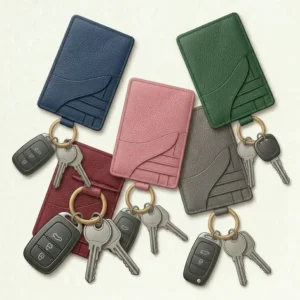
Switching to one of the many card cases with keychain available in 2026 is more than a trendy move; it’s a functional upgrade to your daily workflow. By auditing what you truly need—usually just a license, a primary credit card, and a transit pass—you can eliminate the literal and figurative weight of a bulky wallet. Whether you choose the rugged utility of the Chums Daily Wallet, the tech-forward security of the Vulkit, or the stylish versatility of Thread Wallets, you are choosing a more organized, stress-free lifestyle.
The key is to match the material and features to your specific “wear and tear” patterns. Don’t be afraid to invest a little more for better hardware; your keys and cards are the keys to your life, and they deserve a home that is as secure as it is sleek.
FAQs
❓ How many cards can card cases with keychain hold?
✅ Most models are optimized for 3–6 cards. Some elastic versions, like Thread Wallets, can stretch to hold up to 8, but we recommend keeping it under 5 to maintain the slim profile and ease of access…
❓ Are card cases with keychain safe for car ignitions?
✅ They are safe if you keep the total weight low. Heavy accessories can strain the ignition switch over time. Use a quick-release clip to detach the card case while driving to prevent mechanical wear and tear…
❓ Does RFID blocking interfere with Apple Pay?
✅ No, RFID blocking in a wallet only protects physical cards stored inside. It does not affect the NFC signals sent by your smartphone for Apple Pay or Google Wallet transactions since the phone is outside the case…
❓ Can I fit cash in a card case with keychain?
✅ Yes, but space is limited. Most users fold 1–3 bills into “quarters” and tuck them into a central pocket. If you carry a lot of cash, look for a “gusseted” model or a zippered wristlet like the Coach…
❓ Will the keychain pull the cards out of the case?
✅ If the attachment loop is part of the main pocket’s structure, excessive pulling can stretch the opening. Choose models where the keychain is attached to a reinforced side-seam or an independent metal eyelet to avoid this…
Recommended for You
- 7 Best id card wallet Options for 2026: The Ultimate Guide to Security!
- 7 Best Key Card Holder Options for 2026: The Ultimate Pro Guide!
- Mens Keychain Leather: The Ultimate Style and Security Guide for 2026 🔑
Disclaimer: This article contains affiliate links. As an Amazon Associate, I earn from qualifying purchases. If you purchase products through these links, we may earn a small commission at no additional cost to you.
✨ Found this helpful? Share it with your friends! 💬🤗
[addtoany]
