
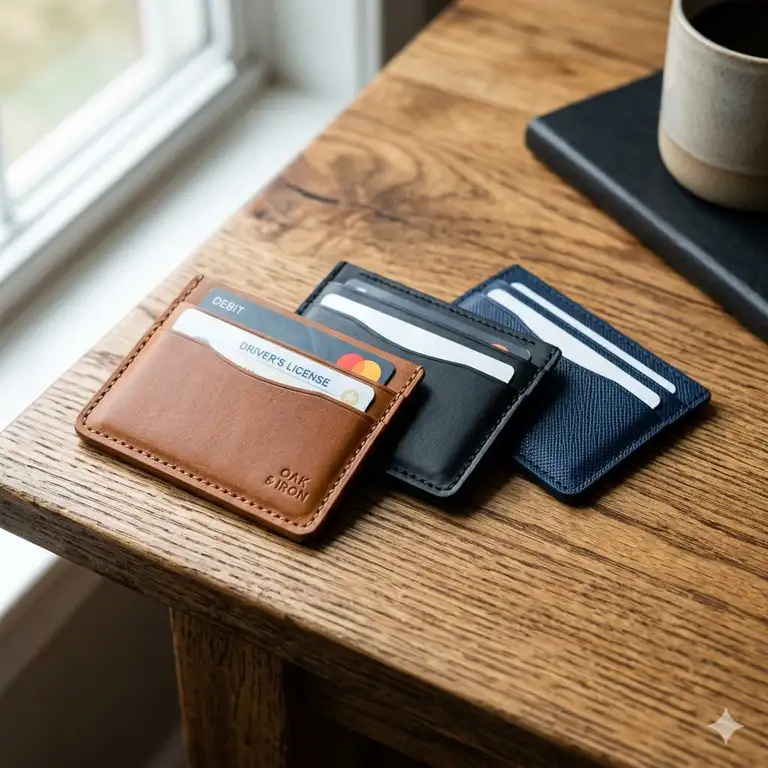
What are leather card holders? By definition, they are minimalist, ultra-slim wallets designed specifically to house essential credit cards, transit passes, and identification, moving away from the traditional bulky bifold. In 2026, these accessories have transcended mere utility to become a statement piece for the modern professional. As digital payments like Apple Pay and Google Wallet have matured, the need to carry fifteen different plastic cards and a wad of cash has vanished. We’ve entered the era of the “Essential Carry,” where your pocket profile matters as much as your smartphone’s battery life.
Choosing the right leather card holders is no longer just about picking a color. It’s about understanding the nuances of leather grades, the efficacy of RFID shielding in an increasingly contactless world, and the ergonomics of card retrieval. I’ve spent years testing how different hides react to the oils in our hands and the friction of denim pockets. What I’ve found is that the “cheaper” option often ends up being the most expensive when you have to replace it every six months because the stitching failed. In this guide, I’ll help you navigate the 2026 market, focusing on durability, patina potential, and the technical specs that actually impact your daily routine.
Quick Comparison of Top-Tier Card Holders
| Product Name | Primary Material | Card Capacity | Best For… | Price Range |
| Bellroy Card Sleeve | Eco-Tanned Leather | 2–8 Cards | Ultimate Slimness | around $55–$65 |
| The Ridge Wallet | Top-Grain Leather / Alu | 1–12 Cards | Rugged Durability | around $95–$125 |
| Ekster Parliament | Premium LWG Leather | 1–10 Cards | Fast Card Access | around $70–$95 |
Looking at the comparison above, the Bellroy Card Sleeve remains the champion for those who prioritize a “vanishing” pocket feel, though it requires a bit of dexterity to use the pull-tab. If you are prone to dropping your gear or spend time in harsh environments, the hybrid construction of The Ridge Wallet justifies its higher price point by offering structural protection that pure leather cannot match. Meanwhile, the Ekster Parliament is the clear winner for tech enthusiasts who value the mechanical satisfaction of a trigger-release mechanism over traditional pocket-digging.
💬 Just one click — help others make better buying decisions too! 😊
[addtoany]
Top 5 leather card holders: Expert Analysis
1. Bellroy Card Sleeve — The Minimalist’s Masterpiece
The Bellroy Card Sleeve is arguably the slimmest design in the Bellroy lineup, utilizing a clever pull-tab mechanism to give you access to stacked cards without widening the wallet’s footprint. It features environmentally certified leather and a dedicated quick-access slot on the front for your most-used card.
In my experience, the pull-tab isn’t just a gimmick; it’s a necessity for a wallet this tight. Most ultra-slim sleeves force you to pinch the leather to get cards out, which eventually stretches the material and ruins the tension. Bellroy solves this by letting the tab do the heavy lifting. This is the ideal choice for someone wearing tailored suits or slim-fit jeans who wants zero pocket bulge. The “eco-tanned” leather used here is thinner than traditional saddle leather, which aids in slimness but means it won’t take as much of a beating.
-
Key Specs: 102mm x 71mm dimensions; weighs approx. 15g; holds up to 8 cards.
-
Expert Opinion: Best for the “front-pocket-only” user who has digitized 90% of their wallet contents.
-
Customer Feedback: Users consistently praise the “invisible” feel in the pocket, though some mention a break-in period of 2 weeks is required for the leather to soften.
-
Pros:
-
Unbeatable slim profile
-
Sustainably sourced materials
-
Pull-tab prevents leather stretching
-
-
Cons:
-
Limited room for cash
-
Not RFID protected
-
-
Price Range: around $55–$65 (Value Verdict: High ROI for daily comfort)
2. The Ridge Wallet (Leather Series) — The Modern Hybrid
The Ridge Wallet is famous for its metal chassis, but their leather-clad versions offer the perfect bridge between “tactical” and “traditional.” By wrapping top-grain leather around an aluminum frame, they provide the warmth of natural materials with the rigid security of a vault.
What most buyers overlook about this model is that the leather isn’t just for show; it provides vital grip. All-metal wallets can be slippery, especially in 2026’s synthetic pocket fabrics. The leather overlay adds just enough texture to keep it secure in your hand while you’re navigating a busy subway turnstile. This is for the person who wants a “forever wallet” but hates the cold, industrial feel of pure titanium or carbon fiber.
-
Key Specs: RFID-blocking plates; expandable elastic track; holds up to 12 cards.
-
Expert Opinion: Perfect for the urban commuter who needs maximum security and a rugged build that won’t crack under pressure.
-
Customer Feedback: High marks for the lifetime warranty and the security of the cards; a few users find the screw-on design slightly bulky compared to pure leather.
-
Pros:
-
Includes integrated RFID blocking
-
Modular cash strap or money clip options
-
Extremely durable construction
-
-
Cons:
-
Heavier than all-leather options
-
Can scratch phone screens if kept in the same pocket
-
-
Price Range: around $95–$125 (Value Verdict: High initial cost, but likely the last wallet you’ll buy)
3. Ekster Parliament — The High-Tech Access Tool
The Ekster Parliament is a smart leather card holder that features a patented card-release mechanism. With a click of a button at the base, your cards fan out in a tiered fashion, making it impossible to grab the wrong one.
The spec sheet won’t tell you this, but the mechanical trigger is surprisingly addictive. Beyond the “cool factor,” it’s incredibly practical for one-handed use—think holding a coffee in one hand and paying for your train with the other. The leather used by Ekster is sourced from the Leather Working Group, ensuring high environmental standards. I recommend this specifically for professionals who frequently use multiple cards (corporate ID, personal credit, transit) and need to switch between them rapidly.
-
Key Specs: Aluminum inner cardholder; premium top-grain leather; solar-powered tracker compatible.
-
Expert Opinion: The gold standard for those who prioritize speed and security over ultimate slimness.
-
Customer Feedback: Travelers love the quick access; some note that the mechanism works best with exactly 5-6 cards inside the aluminum house.
-
Pros:
-
Instant fanned-out card access
-
Built-in RFID protection
-
Optional tracking device integration
-
-
Cons:
-
Moving parts could eventually fail
-
Thicker than a simple sleeve
-
-
Price Range: around $70–$95 (Value Verdict: Great for gadget lovers and frequent travelers)
4. Saddleback Leather Front Pocket ID Wallet — The Old-World Tank
If the other wallets on this list are sports cars, the Saddleback Leather Front Pocket ID Wallet is an armored truck. Made from full-grain leather (the toughest part of the hide) and stitched with marine-grade polyester thread, this wallet is “over-engineered” to a fault.
In my experience, this wallet is the only one on the list that actually looks better five years later than it does on day one. Because it uses full-grain leather, it develops a deep, rich patina that tells the story of your travels. However, be warned: it is stiff out of the box. You will need to “work” the leather with your hands to get it to relax. This is for the traditionalist who values craftsmanship and wants a piece of gear that they can pass down to their kids.
-
Key Specs: Full-grain leather; no breakable parts (no zippers/snaps); 100-year warranty.
-
Expert Opinion: For the person who hates “disposable” culture and wants a wallet that thrives on abuse.
-
Customer Feedback: Users rave about the durability and the 100-year warranty, though some find it a bit “thick” for a minimalist wallet.
-
Pros:
-
Indestructible build quality
-
Beautiful natural patina over time
-
Transparent ID window for easy display
-
-
Cons:
-
Lengthy break-in period
-
Bulkiest option on the list
-
-
Price Range: around $45–$60 (Value Verdict: The best value-per-year of life)
5. Fossil Joshua Leather Card Case — The Reliable All-Rounder
The Fossil Joshua Leather Card Case represents the best of the “big brand” offerings. It’s a straightforward, four-slot card holder made from genuine leather with a center compartment for a few folded bills.
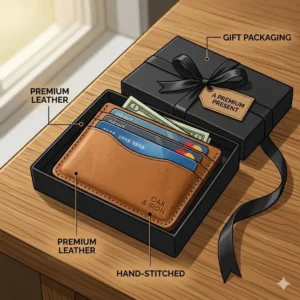
What most people miss is that Fossil has significantly improved their leather sourcing in recent years to compete with boutique brands. While it doesn’t have the “over-engineered” feel of a Saddleback, the stitching is consistent and the leather is soft right out of the box. This is my top recommendation for a “first” card holder or a gift. It’s affordable, looks professional in any setting, and doesn’t try to reinvent the wheel. It’s the safe, reliable choice that performs exactly as advertised.
-
Key Specs: 100% Leather; 4 exterior slots; 1 interior pocket.
-
Expert Opinion: Excellent entry-level card holder for those transitioning away from a bulky bifold.
-
Customer Feedback: Praised for its classic look and immediate usability; some mention the leather is thinner than premium boutique brands.
-
Pros:
-
Available in many colors and textures
-
Requires zero break-in time
-
Very affordable
-
-
Cons:
-
“Genuine” leather is a lower grade than “Full-grain”
-
Standard design lacks a unique “wow” factor
-
-
Price Range: around $30–$45 (Value Verdict: Best “budget” pick for professional aesthetics)
✨ Don’t Miss These Exclusive Deals!
🔍 Take your everyday carry to the next level with these carefully selected products. Click on any highlighted item to check current pricing and availability. These tools will help you create an authentic style your family and colleagues will admire!
Practical Usage Guide: Mastering Your Leather Card Holder
When you first receive your high-quality leather card holder, your instinct might be to jam it full of every card you own. Stop right there. Leather is a biological material; it has “memory.” If you overstuff it on day one, the fibers will stretch to accommodate that bulk, and they will never fully shrink back. This leads to loose pockets where cards can slide out unexpectedly—a nightmare scenario for your high-limit credit cards.
Breaking it In the Right Way
-
The Progressive Load: Start with just 2-3 essential cards for the first week. This allows the stitching to settle without being under extreme tension.
-
Massage the Hide: Spend a few minutes each evening simply rubbing the leather between your fingers. The heat from your hands helps redistribute the natural oils, making the leather more supple.
-
Avoid Chemicals: In 2026, there are countless “leather conditioners” on the market. Most are unnecessary for a card holder. The natural oils from your hands are usually enough. If it gets truly dry, use a tiny amount of vegetable-tanned leather cream, but never use shoe polish.
Optimization Tips
To keep your profile slim, I recommend the “1-in-1-out” rule. If you add a new loyalty card, digitize an old one and leave the physical plastic at home. Most retailers in 2026 can scan a barcode off your phone screen. This keeps your wallet light and prevents the dreaded “costanza” pocket bulge that ruins the silhouette of your trousers.
Problem → Solution: Solving Common Card Holder Pitfalls
Many people hesitate to switch to leather card holders because they fear losing the utility of a larger wallet. Let’s address the three most common “pain points” and how to solve them with the right gear choices.
Problem 1: “I Still Need to Carry Cash”
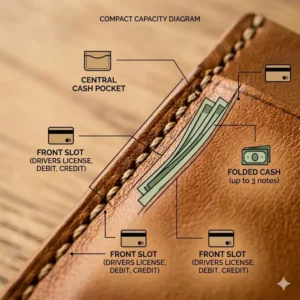
Solution: Many modern card holders, like the Ridge or Ekster, offer integrated cash straps or money clips. However, if you prefer a pure leather feel, look for models with a “center gusset.” This is a slightly wider middle pocket that allows you to fold two or three $20 bills into a small square. Avoid carrying more than five bills, as this creates a “wedge” shape that makes the wallet uncomfortable in your pocket.
Problem 2: “My Cards Are Getting Scratched”
Solution: This usually happens in metal wallets or very tight leather sleeves where grit and lint get trapped. The solution is regular maintenance. Once a month, empty your wallet and use a can of compressed air or a soft brush to clear out the corners. If you use a mechanical wallet like the Ekster, ensure the cards are clean before inserting them; a single grain of sand can scratch the entire face of a card during the ejection process.
Problem 3: “Is RFID Theft Actually Real?”
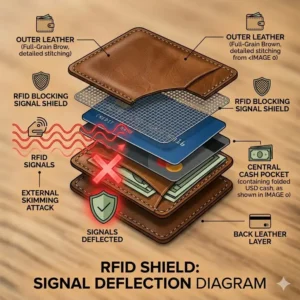
Solution: While the threat of “electronic pickpocketing” is often exaggerated by marketing departments, it is a non-zero risk in high-traffic areas like airports or tech conferences. If you work in a high-security environment or travel internationally, choosing a leather card holder with a built-in Faraday cage (like the Ridge or Ekster) provides peace of mind. For those using a Bellroy or Saddleback, you can buy a single RFID-blocking card to sandwich between your other cards—it’s a cheap way to add security without changing your favorite wallet.
How to Choose the Right Leather Grade
Not all leather is created equal, and the terminology used by manufacturers can be intentionally confusing. In 2026, the gap between “luxury” and “mass-market” leather has widened significantly. To make an informed choice, you need to look past the “Genuine Leather” stamp, which is often a marketing term for the lowest grade of usable hide.
The Hierarchy of Hides
-
Full-Grain Leather: This is the “crème de la crème.” It includes the outer layer of the hide, which contains the toughest fibers. It hasn’t been sanded or buffed to remove natural marks, meaning it retains the most strength and develops the best patina. If you want a wallet for life, this is your only option.
-
Top-Grain Leather: This is the most common grade for high-end fashion wallets. The very top layer is sanded off to remove imperfections, then a finish is applied. It’s thinner and more flexible than full-grain, which makes for a slimmer wallet, but it won’t be quite as durable over 20 years.
-
Genuine Leather / Suede: Usually made from the “split” layers of the hide that remain after the top is stripped away. It’s often spray-painted to look like higher-grade leather. It looks great on day one but often peels or cracks within 12–18 months of heavy use.
When evaluating a purchase, I always look for “vegetable-tanned” leather. Unlike chrome tanning (which uses harsh chemicals and takes 24 hours), vegetable tanning uses natural tannins from tree bark and can take weeks. The result is a leather that smells like a library and ages like a fine wine. It’s an investment in character.
Common Mistakes When Buying leather card holders
The most frequent error I see buyers make is prioritizing the number of card slots over the total thickness. A wallet with six slots might seem better than one with three, but if each slot adds a layer of leather, you end up with a brick in your pocket before you’ve even added your cards. Expert tip: Look for “offset” slots or “single-sleeve” designs. These minimize the layers of leather overlapping each other, keeping the profile truly minimalist.
Another pitfall is ignoring the “edge paint.” Look closely at the edges of the card slots. Are they raw leather, folded over, or covered in a thick, rubbery paint? Cheap edge paint is the first thing to fail; it will crack and peel off, leaving the wallet looking ragged. Higher-end brands like Bellroy or Saddleback either use “burnished” edges (where the leather is polished with heat and wax) or high-quality resin that moves with the leather. If the edges look like they were dipped in plastic, walk away.
The Patina Factor: What to Expect Over 12 Months
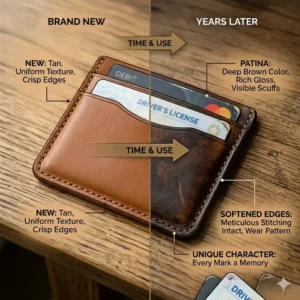
One of the greatest joys of owning high-quality leather card holders is the transformation they undergo. This isn’t a defect; it’s a feature. A brand-new tan wallet will eventually turn a deep, burnished chocolate brown. This happens because the leather absorbs the oils from your hands and UV light from the sun, while the friction of your pocket “polishes” the surface.
In the first three months, you might notice small scratches or scuffs. Don’t panic. Full-grain leather has a high oil content, and most surface marks can be rubbed out with just your thumb. By month six, the wallet will have molded itself to the shape of your cards and your pocket. It becomes a custom-fit accessory. By month twelve, the leather will have reached its peak “character.” This aesthetic evolution is why many EDC enthusiasts refuse to use synthetic or metal wallets—they want a piece of gear that grows with them.
Sustainable Sourcing in the 2026 Leather Industry
As we move through 2026, the ethics of leather production have become a central concern for consumers. The US Environmental Protection Agency and international bodies have tightened regulations on tanneries, particularly regarding water usage and chemical runoff. When choosing a card holder, looking for the Gold-Rated LWG (Leather Working Group) certification is the best way to ensure your wallet wasn’t produced at the cost of a local river system.
Many brands are also experimenting with “Bio-Leathers” made from mushrooms or pineapple fibers. While these are great for the environment, my expert analysis shows they still lack the tensile strength and patina potential of traditional bovine leather. If sustainability is your priority, the most “green” thing you can do is buy one high-quality full-grain leather wallet that lasts 20 years, rather than five synthetic ones that end up in a landfill.
✨ Don’t Miss These Exclusive Deals!
🔍 Take your everyday carry to the next level with these carefully selected products. Click on any highlighted item to check current pricing and availability. These tools will help you create an authentic style your family and colleagues will admire!
Conclusion: Finding Your Perfect Pocket Companion
Navigating the world of leather card holders in 2026 is about finding the intersection of traditional craftsmanship and modern necessity. Whether you choose the ultra-slim Bellroy Card Sleeve, the indestructible Saddleback, or the tech-forward Ekster, the goal is the same: to declutter your life and elevate your daily carry. A good wallet is more than just a place to store plastic; it’s a tactile reminder of quality in a world of disposable goods.
Take a moment to look at your current wallet. If it’s a bulging brick of old receipts and unused loyalty cards, it’s time for a change. Transitioning to a minimalist leather card holder isn’t just an aesthetic choice; it’s a lifestyle shift toward intentionality. Choose a piece that speaks to your style, treat it with a little respect, and it will reward you with decades of service and a story told through its patina.
FAQs
❓ Are leather card holders better than metal ones?
✅ It depends on your priorities. Leather offers a classic aesthetic, a unique patina, and a softer feel in the pocket. Metal wallets, like the Ridge, provide superior RFID protection and crush resistance. For most professionals, leather is the preferred choice for its comfort and style…
❓ How many cards can a slim leather card holder realistically hold?
✅ Most are designed for 4–6 cards. While some claim to hold 10+, doing so usually ruins the slim profile and stretches the leather. I recommend carrying 4 essentials: ID, primary credit card, debit card, and one “emergency” card…
❓ Do I really need RFID protection in 2026?
✅ While “skimming” is less common than it used to be due to improved chip technology, it remains a risk in crowded urban areas. If you carry contactless-enabled cards, an RFID-blocking wallet provides an extra layer of digital security for peace of mind…
❓ How do I clean a leather card holder?
✅ Use a slightly damp (not wet) microfiber cloth to wipe away surface dirt. For deeper stains, use a dedicated leather soap. Never submerge the wallet in water or use a hair dryer to dry it, as this will cause the leather to crack…
❓ Will a leather card holder ruin my cards?
✅ Only if the pockets are too tight or if dirt gets trapped inside. High-quality leather is actually quite gentle on plastic. To prevent “card embossing” (where the card numbers press into the leather), try to rotate the direction your cards face every few months…
Recommended for You
- Id Card Holder Keychain: 7 Best Durable Picks for 2026 (Booyah!)
- 7 Best Key Card Holder Options for 2026: The Ultimate Pro Guide!
- 7 Best id card card holder Options for 2026: Secure Your Identity!
Disclaimer: This article contains affiliate links. As an Amazon Associate, I earn from qualifying purchases. If you purchase products through these links, we may earn a small commission at no additional cost to you.
✨ Found this helpful? Share it with your friends! 💬🤗
[addtoany]
