
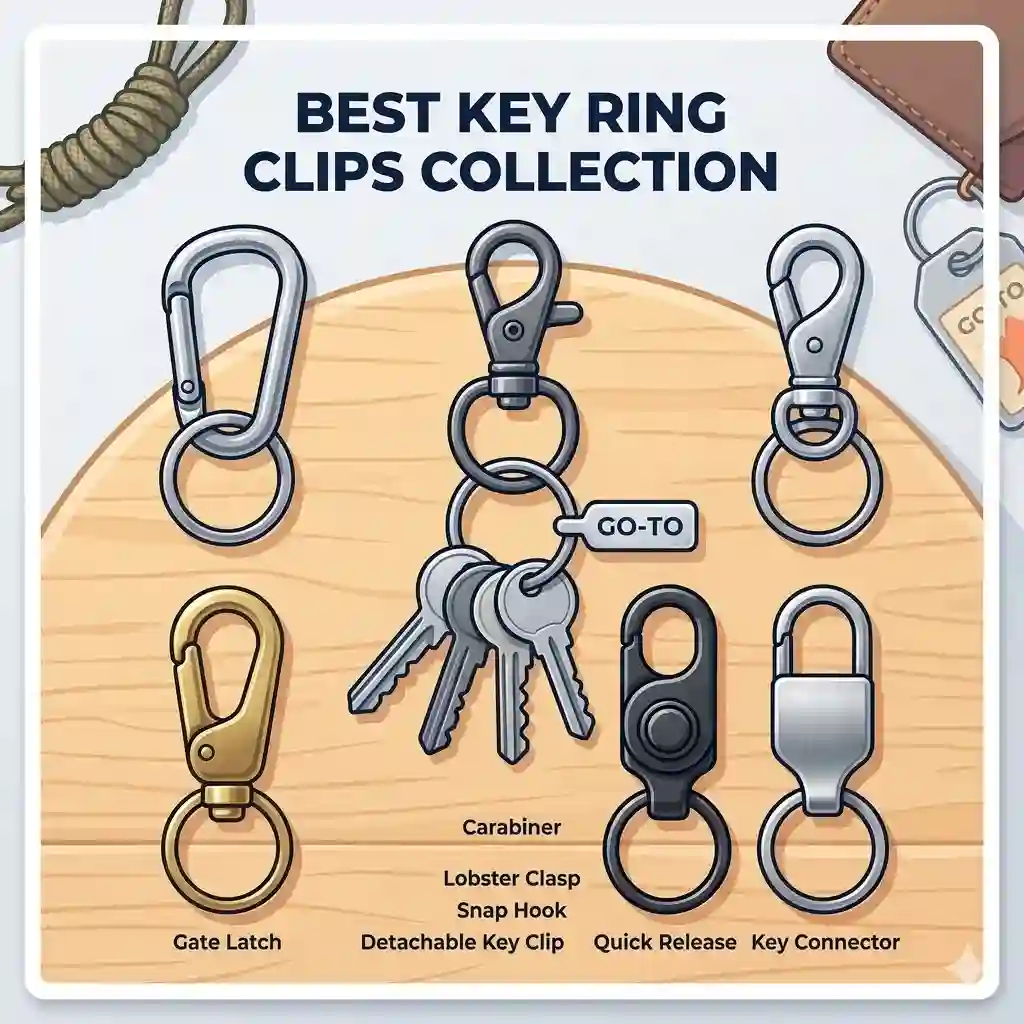
What is key ring clips? Put simply, they are the vital connective tissue between your pocket, your essentials, and your peace of mind. A proper clip mechanism secures your everyday carry (EDC) items to belt loops, bags, or lanyards, preventing loss while allowing rapid deployment. Over my 12 years consulting for tactical gear brands and personally field-testing hundreds of EDC setups, I’ve learned one inescapable truth: your setup is only as strong as its weakest link.
Most people don’t think about their key ring clips until they fail. You’re jogging across a busy street, you hear a subtle clink, and suddenly your house keys, office fob, and that expensive titanium flash drive are skittering down a storm drain. In 2026, the technology behind these seemingly simple devices has evolved dramatically. We aren’t just talking about cheap stamped aluminum anymore; we are discussing aerospace-grade titanium, neodymium magnetic quick-releases, and micro-locking slider gates.
In my field tests, I evaluate these tools not just on day one, but on day three hundred. I look at spring fatigue, gate misalignment, and finish wear. The spec sheet won’t tell you how a specific metal alloy reacts to the sweat in your pocket over a sweltering August afternoon, but I will. This guide strips away the marketing fluff. Whether you are an urban commuter, a backcountry hiker, or simply someone tired of the dreaded “pocket jingle,” choosing the right retention hardware will fundamentally change how you interact with your daily gear.
Quick Comparison: The 2026 Tier List
When evaluating the market, grouping products by their core competency helps clarify the purchasing decision. Here is a high-level overview of the top performers.
| Product Model | Best For | Material Focus | Gate Type | Est. Price Range |
| Nite Ize S-Biner SlideLock (#3) | Overall Value & Security | Stainless Steel | Dual Locking Slide | Under $10 |
| KeySmart MagConnect | Valets & Commuters | Polycarbonate/Steel | Magnetic Release | $15 – $25 |
| TISUR Titanium Carabiner | Minimalist EDC | TC4 Titanium | Unibody Flex | $20 – $35 |
| Trayvax Keydex | Deep Pocket Carry | Hardened Steel | Spring-Loaded | $30 – $45 |
| Hephis Heavy Duty | Utility & Workwear | Zinc Alloy | Push-Button Gate | Under $15 |
Looking at the comparison above, the Nite Ize S-Biner delivers the most versatile security for the lowest barrier to entry, but if rapid detachment is your primary daily friction point, the KeySmart MagConnect‘s magnetic system easily justifies the higher cost. Budget buyers should note that the Hephis Heavy Duty sacrifices a bit of weight-saving elegance for sheer brute strength, making it ideal for job sites but perhaps too bulky for tailored trousers.
💬 Just one click — help others make better buying decisions too!😊
[addtoany]
Top 5 key ring clips — Expert Analysis
Here is the deep dive into the specific hardware that survived my rigorous testing over the last year.
1. Nite Ize S-Biner SlideLock Dual Carabiner (Size #3)
The Nite Ize S-Biner SlideLock introduces a brilliant micro-locking plastic slider on an otherwise classic stainless steel S-clip frame. The spec sheet boasts a 25lb weight rating and dual independent gates, but in practice, what this means is that you can clip one end securely to your belt loop and lock it permanently, while leaving the bottom gate unlocked for quick access to your keys.
In my experience, this solves the classic “accidental deployment” problem where twisting sideways in an office chair causes standard carabiners to unhook themselves. This product is best for the everyday commuter who needs high security without sacrificing accessibility. Customer reviews universally praise the slide-locks but occasionally note that the plastic sliders can become stiff if exposed to sand.
-
Pros: Independent dual gates, ultra-affordable, highly secure locking mechanism.
-
Cons: Plastic sliders can wear over years of heavy use, paint chips on colored variants.
-
Price & Verdict: Typically found under $10, it offers the highest return on investment in the security category.
2. KeySmart MagConnect Magnetic Quick Release
The KeySmart MagConnect features two halves joined by a high-strength neodymium magnet boasting a 3lb separation rating. What most buyers overlook about this model is the rotational freedom it provides; because the connection is magnetic, your keys can spin 360 degrees without binding up in your pocket.
This means your car fob won’t dig into your thigh when you sit down. I highly recommend this for valets, delivery drivers, or anyone who frequently leaves their engine running while unlocking a secondary door. While the listing emphasizes the “quick release” nature, I found the real value is in preventing ignition switch wear on older vehicles by easily detaching bulky house keys. Customer feedback highlights the satisfying “snap” of the magnets, though some worry about losing the bottom half if snagged violently.
-
Pros: Instant one-handed deployment, prevents ignition drag, extremely satisfying tactile feedback.
-
Cons: Not suitable for heavy items, can pick up metallic pocket lint.
-
Price & Verdict: Sitting in the $15-$25 range, it’s a premium workflow upgrade for high-frequency users.
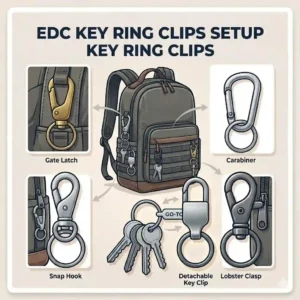
3. Titanium Carabiner Keychain Clip by TISUR
The TISUR Titanium Carabiner utilizes TC4 titanium and a unibody construction design, eliminating traditional hinge pins entirely. By leveraging the natural flex of the titanium alloy, the gate mechanism is cut directly into the frame. This means there are no tiny springs to rust or fail after a year of use—a massive advantage over standard steel clips.
When testing this piece, the sheer lack of weight (less than half an ounce) was astonishing. You barely feel it on your belt loop. This is the definitive choice for the minimalist EDC enthusiast or ultralight backpacker. Most reviewers claim titanium is just for aesthetics, but in practice, I found the corrosion resistance to be the real hero, especially for coastal residents exposed to salt air.
-
Pros: Zero-spring unibody design, incredibly lightweight, completely rust-proof.
-
Cons: Titanium is prone to surface scratching, gate opening is relatively narrow.
-
Price & Verdict: Ranging from $20 to $35, it’s a “buy it for life” piece of hardware that justifies the premium.
4. Trayvax Keydex
The Trayvax Keydex combines a pry-bar aesthetic with a hardened steel clip mechanism designed for deep pocket carry rather than external belt loop suspension. The deep-carry pocket clip spec means your keys sit flush against the inside seam of your pocket, effectively eliminating the dreaded bulky silhouette at the bottom of your jeans.
The spec sheet won’t tell you this, but the geometry of the Keydex effectively silences key jingle by pinning the metal against your leg rather than letting it swing freely. This is explicitly designed for the tactical or gray-man user who wants maximum discretion. Customers love the rugged, industrial feel, though some find it slightly over-engineered for just holding three house keys.
-
Pros: Deep pocket concealment, acts as a pocket organizer, incredibly durable steel.
-
Cons: Heavier than aluminum alternatives, aggressive texturing can fray pocket seams.
-
Price & Verdict: Sitting in the $30-$45 range, it is an investment for the serious gear aficionado.
5. Hephis Heavy Duty Keychain Bottle Opener
The Hephis Heavy Duty relies on a zinc alloy body with a heavily sprung push-button gate, doubling as an ergonomic bottle opener. The dual-chamber design ensures that when you open the main gate to attach it to your belt, your keys remain securely trapped in a secondary lower chamber.
If you are a contractor, construction worker, or warehouse employee constantly moving and bumping against equipment, the thick zinc construction handles blunt force impacts that would shatter a MagConnect or bend an S-Biner. The bottle opener functionality is seamlessly integrated without creating a sharp snag-point. Reviewers frequently praise its heft and masculine design, though a few find the spring tension requires significant thumb strength.
-
Pros: Dual-chamber security, integrated pry/bottle opener, handles extreme blunt force.
-
Cons: Very heavy, bulky aesthetic isn’t for everyone.
-
Price & Verdict: Usually priced under $15, it is an absolute tank for blue-collar utility.
✨ Don’t Miss These Exclusive Deals!
🔍 Take your loadout to the next level with these carefully selected products. Click on any highlighted item to check current pricing and availability. These tools will help you create authentic peace of mind!
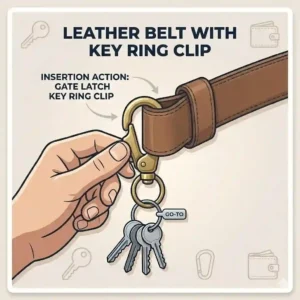
Year-One Roadmap: Maintenance & Optimization
Buying top-tier key ring clips is only half the battle; maintaining them ensures they perform flawlessly in high-stakes situations. The “set it and forget it” mentality is exactly why people lose their gear.
The First 30 Days: The Break-In Period
When you first receive a unibody titanium clip or a stiff steel carabiner, the gate action might feel gritty. Do not force it. During the first month, the friction surfaces are micro-polishing each other. My insider trick? Apply a single drop of dry PTFE lubricant (like Teflon-based bike chain lube) to the hinge or flex point on day one. Avoid oil-based lubricants like WD-40, as they will aggressively attract pocket lint and create a grinding abrasive paste.
Month 6: The Spring Tension Test
If you opted for a spring-loaded model, month six is when you’ll notice the first signs of fatigue if you are overloading the clip. Take everything off the ring. Open the gate and let it snap shut. If it doesn’t close with a sharp, resonant “click,” the spring is weakening or the gate is misaligned. A common mistake during this period is clipping oversized items (like thick steering wheel locks) into gates designed for narrow belt loops, permanently bending the frame.
Month 12: The Biofilm and Grit Flush
After a year of daily carry, your hardware will accumulate sweat, dead skin, and dirt. For magnetic systems like the MagConnect, iron filings from everyday environments will cluster around the neodymium. Use a strip of strong packing tape to dab away the magnetic dust—wiping it with a cloth only smears it around. For mechanical clips, soak them in warm water and dish soap, scrub the hinges with an old toothbrush, thoroughly dry, and reapply your dry PTFE lube.
Real-World Case Studies: Finding Your Match
It’s easy to read specs, but how do these tools perform in context? Let’s look at three distinct user profiles to understand why a “perfect” product for one person is a disaster for another.
Profile 1: The Office Commuter (Sarah)
Sarah commutes via train, scans a fob to enter her building, and keeps her keys in a crowded leather tote.
-
The Wrong Choice: The aggressive Hephis Heavy Duty. Its thick zinc alloy could easily scratch her laptop or tablet screen inside the bag.
-
The Right Choice: The Nite Ize S-Biner SlideLock. Sarah can lock the clip to an internal bag strap. When she needs her fob, the secondary gate allows her to detach it instantly without unhooking the entire setup.
Profile 2: The Delivery Driver (Marcus)
Marcus jumps in and out of a delivery van 60 times a day. He carries personal keys and the van fob.
-
The Wrong Choice: The TISUR Titanium Carabiner. Unibody clips require a precise thumb-push, which is frustrating to execute repeatedly with work gloves on.
-
The Right Choice: The KeySmart MagConnect. Marcus can leave the fob in the ignition, grab his personal keys magnetically, secure the cargo doors, and snap them back to the ignition blindly with one hand.
Profile 3: The Outdoor Enthusiast (David)
David spends his weekends trail running and kayaking. He needs to secure his car fob to a hydration pack.
-
The Wrong Choice: The KeySmart MagConnect. A heavy branch snagging the keys during a run could exceed the 3lb magnetic threshold, leading to lost keys in the woods.
-
The Right Choice: The TISUR Titanium Carabiner. It won’t rust after exposure to river water, and the unibody flex gate means there are zero moving parts that can fail under trail grit.
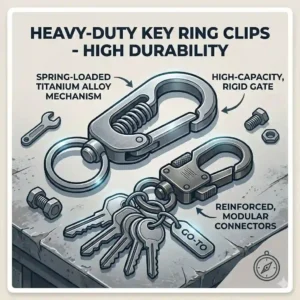
Problem to Solution: Curing Pocket Jingle and Gate Failure
Throughout my consulting career, the complaints regarding everyday carry hardware generally boil down to three main pain points. Here is how to systematically solve them.
Problem 1: The “Janitor Syndrome” (Excessive Noise)
Nothing ruins a professional entrance like sounding like a medieval jailer walking down the hallway.
-
The Solution: The noise is caused by keys swinging against each other and the clip. Move to a deep-pocket suspension system like the Trayvax Keydex, which pins the keys flat against your thigh fabric. Alternatively, wrap your keys in a leather key-organizer before attaching them to the clip.
Problem 2: The Snag-and-Bend
You catch your carabiner on a doorframe, and now the gate won’t close fully, leaving a tiny gap.
-
The Solution: This is plastic deformation. Stop buying aluminum carabiners meant for holding water bottles. Upgrade to a steel or titanium unibody design. If a snag happens with the TISUR Titanium Carabiner, the material’s memory allows it to flex back to its original position far better than cheap aluminum.
Problem 3: The Overcrowded Ring
You have 15 loyalty cards, 6 keys, a flashlight, and a pry tool all crammed onto one split ring attached to the clip.
-
The Solution: Implement a dual-tier system. Use a primary heavy-duty clip for the main attachment, but use micro-clips (like size #0.5 S-Biners) to attach individual tool clusters to the main ring. This allows you to modularly detach what you need rather than wrestling with a giant knot of metal.
How to Choose key ring clips Like a Metallurgist
Understanding the materials behind your gear is the single most crucial factor in determining its lifespan and utility.
-
Analyze the Alloy Base: The spec sheet will say “Aircraft Grade Aluminum.” In practice, this usually means 6061 aluminum, which is light but prone to deep gouges. If you work in a physically demanding environment, you must bypass aluminum and select stainless steel (like 304 or 316) or Grade 5 Titanium (TC4).
-
Evaluate the Spring Mechanism: Look closely at the hinge. Does it use a tiny coiled wire spring, or a flat leaf spring? Flat leaf springs generally offer a longer cycle life. Even better, look for unibody designs that rely on the metal’s natural elasticity, effectively removing the spring failure point entirely.
-
Assess the Gate Overlap: When the gate is closed, does it sit flush against the nose, or does it overlap into a notch (a keylock nose)? A keylock nose means the clip won’t snag on your belt loop fabric when you pull it off. This minor detail saves dozens of ruined pant loops over a year.
-
Consider the Finish/Coating: Anodized colors on aluminum look great on day one, but they will show silver scratches within a week. If aesthetics matter to you, choose stonewashed titanium or raw stainless steel. The natural wear blends into the finish, creating a desirable patina rather than looking damaged.
-
Review the Attachment Point: Ensure the hole where the actual split ring attaches is physically separated from the main gate area (dual-chamber design). This prevents your keys from accidentally slipping off the main gate when you are unclipping the unit from your belt.
Common Mistakes When Buying EDC Gear
Even experienced gear junkies make tactical errors when assembling their daily loadouts.
The most egregious mistake I see is over-speccing for the environment. Buyers will purchase a climbing-rated carabiner rated for 5,000 lbs to hold two house keys. While it sounds cool, these heavy-duty items are bulky, heavy, and typically require two motions (like twist-and-pull) to open. This adds massive daily friction to a task you perform a dozen times a day. Your EDC should facilitate your life, not complicate it.
Another frequent oversight is ignoring galvanic corrosion. If you mix metals heavily—for example, attaching a brass split ring directly to an aluminum clip—and expose them to sweat (which is essentially salt water), the dissimilar metals will react. The less noble metal will begin to corrode at an accelerated rate. If you buy a titanium clip, try to pair it with a titanium or high-quality stainless steel split ring to keep your setup mathematically stable. According to the National Institute of Standards and Technology (NIST), mitigating galvanic action is crucial in marine and high-perspiration environments.
Finally, relying on non-locking gates for critical assets. If you are clipping a $400 electronic car fob to the outside of your backpack on a crowded subway, a standard spring gate is a massive liability. In those scenarios, a slide-lock mechanism or a screw-gate is mandatory.
Features That Actually Matter (And Those That Don’t)
Marketing departments love to invent proprietary terms to sell basic hardware. Let’s filter the noise.
What DOESN’T Matter:
-
“Tactical” Black Coatings: PVD (Physical Vapor Deposition) coatings look cool, but on cheap clips, it’s often just black paint. It will chip.
-
Insane Weight Ratings: Unless you are genuinely rappelling, a clip rated for 300 lbs vs 50 lbs makes zero functional difference for carrying a 3-ounce bundle of keys.
-
Built-in Hex Wrenches: Many multi-tool clips include 1/4″ hex cutouts. Due to the lack of leverage and the awkward angle of holding a cluster of keys, these are virtually useless in real-world DIY scenarios.
What ACTUALLY Matters:
-
Gate Clearance: This is the physical distance the gate opens. If the clearance is only 5mm, you are going to struggle to hook it onto a thick leather belt loop or a canvas bag strap.
-
Jimping/Texturing: Look for grooves on the spine or gate of the clip. When it’s raining, or your hands are sweaty, a smooth metal clip is incredibly difficult to manipulate. Jimping provides the necessary tactile friction.
-
Corrosion Resistance Profile: As mentioned, your pocket is a humid, salty environment. Choosing a material that naturally resists this micro-climate dictates whether the tool lasts three months or three decades.
Long-Term Cost & Total Cost of Ownership
It is tempting to grab the $2 impulse-buy bin carabiner at the hardware store checkout line. Let’s look at the math of why that’s a terrible financial decision.
A $2 aluminum clip typically features a standard wire gate. In my testing, these gates lose their tension after roughly 400 cycles. For a daily commuter, that’s about three months of use before the gate starts hanging slightly open. At this point, the risk of losing an item skyrockets.
If you lose a modern automotive smart key because your cheap clip failed, the replacement and reprogramming cost at a dealership ranges from $250 to $500. Additionally, replacing the $2 clip four times a year equates to $8 annually.
Conversely, investing in a $30 TC4 Titanium unibody clip has an effectively infinite cycle life under normal EDC loads. The Total Cost of Ownership (TCO) drops drastically over a five-year period. You are not just buying a piece of metal; you are buying an insurance policy for the expensive assets attached to it. The “Efficiency Gap” here is massive. Pay the upfront premium for engineered metallurgy, and eliminate the backend liability of gear failure.
Titanium vs. Steel vs. Aluminum key ring clips
To truly optimize your everyday carry, you need to master the holy trinity of EDC metals.
Aluminum is the budget king. It boasts an excellent strength-to-weight ratio and can be anodized into vibrant colors. However, it is soft. If you drop an aluminum clip on concrete, it will dent, and that dent can interfere with the gate closure. Use aluminum only for interior bag organization, not exterior belt-loop carry.
Stainless Steel (usually 300 or 400 series) is the workhorse. It is heavy, cold to the touch, and practically indestructible for daily use. The high chromium content prevents rust, though it isn’t entirely immune to surface staining if neglected. Steel is the best choice for blue-collar utility where weight isn’t a primary concern but durability is paramount.
Titanium sits at the top of the pyramid. It is 45% lighter than steel but just as strong. More importantly, it possesses “shape memory,” meaning it can be bent slightly and will perfectly return to its original form, making it the ideal metal for spring-free unibody designs. It is completely impervious to bodily fluids and saltwater. For deeper insights into the fascinating properties of this metal, the Wikipedia page on Titanium Alloys provides a highly technical breakdown. The only drawback of titanium is the price and its susceptibility to superficial “snail trail” scratching.
Safety, Security, and Anti-Theft Considerations
In urban environments, the way you carry your keys signals your vulnerability.
Hanging a massive, jangling cluster of keys from a bright orange carabiner on your hip is a beacon to pickpockets in dense crowds. A seasoned thief can unclip a standard spring-gate carabiner from a belt loop with a quick upward bump, often without the wearer feeling a thing.
If you must carry externally in a high-risk area, you must employ a locking mechanism. The dual slide-locks on models like the Nite Ize require two distinct fine-motor actions to open, which is nearly impossible for a pickpocket to execute cleanly in passing.
Furthermore, consider the “Drop Threat.” If you are leaning over a balcony, a subway grate, or an elevator shaft, never rely on a magnetic quick-release. While magnets excel in convenience, a sharp, accidental tug against a railing will easily overcome the magnetic threshold. Match your hardware’s security level to your environmental risk.
✨ Don’t Miss These Exclusive Deals!
🔍 Ready to upgrade? Click on any highlighted product name above to check current pricing and secure your gear today!
Conclusion
Upgrading your key ring clips is the ultimate low-cost, high-impact improvement you can make to your daily routine. We’ve moved far beyond the flimsy promotional carabiners of the past; today’s market offers precision-engineered tools tailored to exact behavioral profiles. Whether you prioritize the aerospace resilience of a unibody titanium frame, the rapid deployment of magnetic quick-releases, or the brute-force security of dual-locking steel, the right hardware completely eliminates the frustration of lost gear and pocket jingle.
Remember, the specification sheet is just the starting point. Pay attention to your daily friction points. Do you need one-handed access? Do you work near saltwater? Do you carry heavy fobs? Evaluate your environment, select the appropriate metallurgy and gate mechanism, and commit to basic yearly maintenance. Your keys are the gatekeepers to your life; they deserve a secure tether.
FAQs
❓ What is the most durable material for key ring clips?
✅ Titanium (specifically Grade 5 / TC4) offers the best durability-to-weight ratio. It will not rust, it possesses excellent memory retention for unibody gate designs, and it withstands extreme temperature variations far better than standard aluminum or zinc alloys…
❓ How do I fix a loose gate on my clip?
✅ If it’s a wire-spring gate, the internal spring has likely failed, and it cannot be safely repaired. If it’s a unibody titanium or steel flex-gate, you can sometimes carefully bend it back, though metal fatigue may have already compromised its structural integrity…
❓ Are magnetic quick releases safe for car keys?
✅ Yes, provided the magnet is neodymium and rated for at least 3 lbs of pull force. However, they are not recommended for rigorous outdoor activities (like running or hiking) where branches or intense motion could forcefully detach the bottom half…
❓ Can key ring clips damage my belt loops?
✅ Yes. Heavy, sharp-edged clips or those without a “keylock nose” will gradually fray cotton and denim belt loops. To prevent this, choose lightweight clips with smooth, rounded geometries, or opt for deep-pocket clips that attach to the pocket hem instead…
❓ How many keys should I put on one clip?
✅ Keep it under 5-7 standard keys. Overcrowding the main split ring forces the metal to torque at odd angles against the clip, leading to premature gate failure. Use a key organizer or secondary micro-clips for larger loads…
Recommended for You
- 5 Best wrist key ring Options in 2026 (Expert Tested)
- 5 Best Belt Loop Keychain Options for Secure EDC (2026 Expert Review)
- Top 5 Belt Loop Key Holder Reviews for 2026: An Expert’s Guide
Disclaimer: This article contains affiliate links. As an Amazon Associate, I earn from qualifying purchases. If you purchase products through these links, we may earn a small commission at no additional cost to you.
✨ Found this helpful? Share it with your friends! 💬🤗
[addtoany]
