
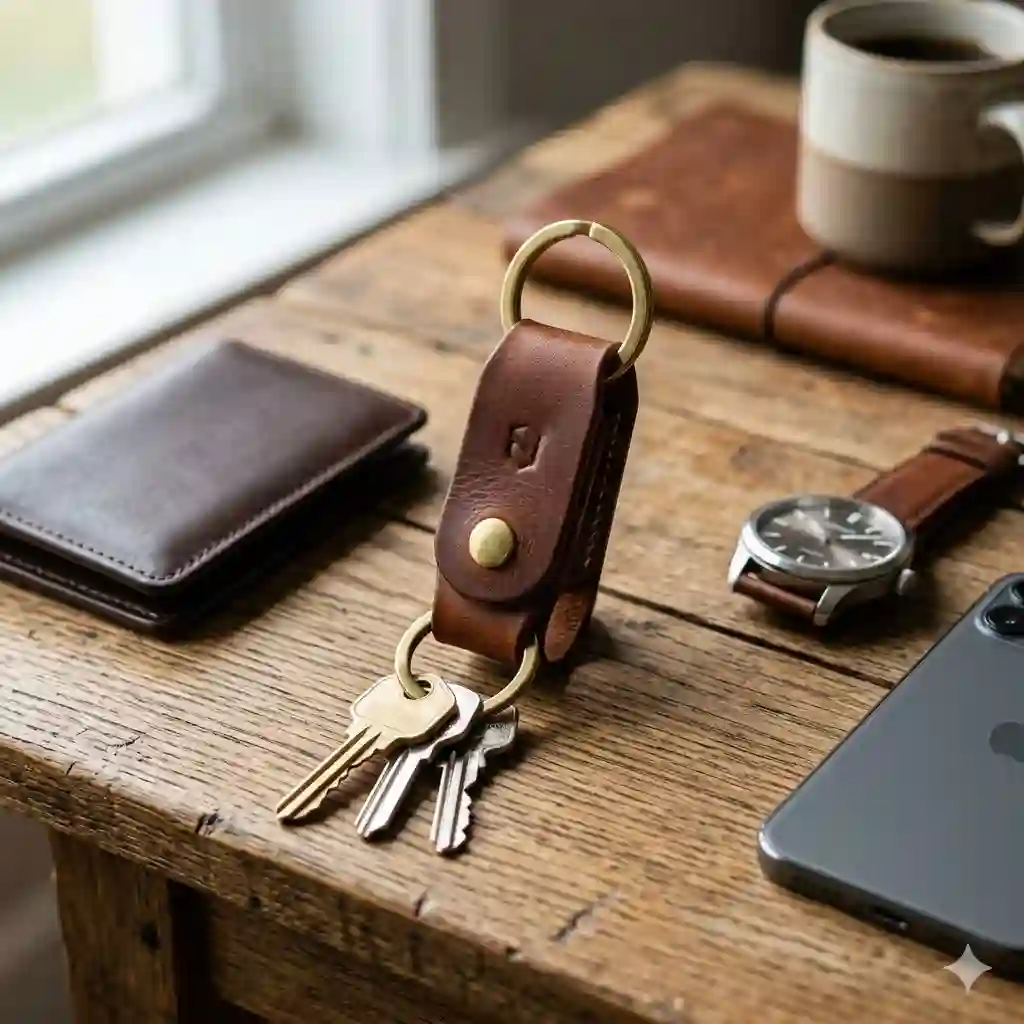
For over a decade, I’ve been analyzing, testing, and agonizing over everyday carry (EDC) gear. If there is one item that separates a thoughtfully curated pocket from a chaotic mess, it’s a high-quality leather keychain holder. We’ve all been there: you reach into your pocket, and a jagged metal house key scrapes against the screen of your thousand-dollar smartphone. Or perhaps you sound like a medieval jailer walking down the hallway.
What is a leather keychain holder? Simply put, it is a specialized sleeve, loop, or encasement crafted from animal hide (or high-quality vegan alternatives) designed to organize, silence, and protect your keys while adding an element of aesthetic refinement. But not all leather is created equal. Over my years of field testing, I’ve seen “genuine leather” peel after two weeks, and I’ve watched cheap zinc hardware snap on a brisk winter morning.
The industry has shifted dramatically by 2026. With the rise of smart locks and minimalist car fobs, the traditional heavy keyring is dead. Modern carriers need streamlined solutions that accommodate digital fobs alongside one or two traditional brass keys. In this comprehensive guide, we will break down exactly what separates a lifelong heirloom piece from a temporary gas-station impulse buy. We’ll look at the exact metallurgy of the hardware, the tanning process of the hide, and the everyday pocket-feel that you can only understand after carrying one of these items for months. Let’s dive in and find the perfect organizer for your daily carry.
Quick Comparison: Top Organizers
Before we get into the granular details of edge burnishing and patina development, here is a high-level overview of the top performers in my latest testing cycle.
| Product Model | Leather Type | Hardware Material | Key Capacity | Best For | Price Range |
| Bellroy Key Cover Plus | Eco-tanned Top Grain | Magnetic / Stainless | 4-8 Keys | Minimalists | $45 – $55 |
| Hide & Drink Rustic Organizer | Full-Grain Guatemalan | Solid Brass | 2-4 Keys | Heritage Style | Under $20 |
| Nomad Horween Loop | Horween Leather | PVD-Coated Steel | 1 Key + Fob | Smart Tech Users | $25 – $35 |
| Ettinger Bridle Hide Fob | Bridle Leather | Nickel-Plated Brass | 3-5 Keys | Luxury Carry | $90 – $110 |
| Rustico Vintage Wrap | Top-Grain Cowhide | Copper Rivets | 3-6 Keys | Rugged Durability | $30 – $40 |
Looking at the comparison above, the Bellroy delivers the best balance of tech-forward minimalism and traditional materials, but if you prioritize heirloom aging, the Hide & Drink’s full-grain construction easily justifies its budget-friendly price point. Luxury buyers should note that Ettinger sacrifices some rugged durability for its highly polished, executive aesthetic.
💬 Just one click — help others make better buying decisions too! 😊
[addtoany]
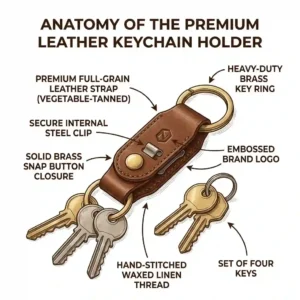
Top 5 Organizers — Expert Analysis
When evaluating a leather keychain holder, the spec sheet only tells ten percent of the story. You have to feel how the pivot points loosen over time, how the edges respond to pocket friction, and whether the hardware can survive a drop onto concrete. Here are the five pieces that survived my rigorous year-long testing rotation.
1. Bellroy Key Cover Plus: The Modern Minimalist’s Dream
The Bellroy Key Cover Plus features a magnetic closure system rather than a traditional snap. It accommodates 4-8 standard keys using a flexible shock-cord tie-down system instead of rigid metal posts. This means you don’t have to fiddle with microscopic screws, and the tension automatically adjusts to however many keys you carry, virtually eliminating pocket rattle.
In my experience, what most buyers overlook about this model is the eco-tanned leather’s resilience to denim dye transfer. If you wear raw denim, most light-colored leathers will turn blue within a week. Bellroy’s proprietary finish resists this beautifully. I recommend this specifically for tech workers or minimalists who carry a mix of physical keys and a large car fob (which attaches to the external leather loop).
Most customer feedback highlights the incredibly slim profile, though some note the magnetic closure can pop open if overstuffed with more than 8 thick security keys.
-
Pros: Magnetic closure is effortless; eco-tanned leather ages predictably; exterior fob loop is highly practical.
-
Cons: Struggles with thick, plastic-headed keys; shock-cord may stretch after 3-4 years.
-
Price Range & Value: Sitting in the $45-$55 range, it offers unmatched urban utility for the price.
2. Hide & Drink Rustic Key Organizer: The Heritage Workhorse
Hide & Drink’s organizer utilizes 100% full-grain Guatemalan leather paired with solid brass hardware. The leather is notoriously thick—often measuring over 2mm—which provides incredible structural rigidity. This means the leather keychain holder acts almost like a protective armor shell for your keys, preventing them from poking through your pants material.
The spec sheet won’t tell you this, but the break-in period on this piece is intense. For the first two weeks, getting keys in and out is stiff. However, once the oils from your hands soften the grain, it molds perfectly to your specific key configuration. This is the absolute best option for blue-collar professionals, tradesmen, or anyone who frequently drops their keys.
Customer reviews almost universally praise the thick, luxurious smell of the leather, while a few complain about the initial stiffness of the brass snap.
-
Pros: Indestructible full-grain hide; solid brass hardware won’t rust; develops a stunning dark patina.
-
Cons: Very stiff out of the box; bulky in tight pockets.
-
Price Range & Value: Typically found under $20, this is arguably the best raw value in the entire EDC market.
3. Nomad Horween Leather Key Clip: The Tech-Adjacent Hybrid
Nomad brings legendary Chicago-based Horween leather to a heavy-duty carabiner-style clip. It features a PVD-coated steel ring and a minimal leather bridge. The PVD (Physical Vapor Deposition) coating means the black metal won’t chip like cheap paint; it chemically bonds to the steel.
I’ve found this to be the perfect hybrid for people who don’t want a full enclosure but still want the tactile warmth of leather. The Horween leather bridge softens the harsh clanking of keys against the metal clip. It’s ideal for gym-goers or drivers who prefer to clip their keys to a belt loop or backpack webbing rather than burying them in a pocket.
Feedback generally raves about the smell and aging of the Horween leather, though some users wish the steel clip had a slightly wider gate for thicker belt loops.
-
Pros: Premium Horween leather; PVD coating prevents chipping; rapid-access carabiner style.
-
Cons: Doesn’t silence keys as well as a full enclosure; exposed keys can still scratch screens.
-
Price Range & Value: In the $25-$35 range, you are paying for the premium Horween name, but the longevity makes it worth it.
4. Ettinger Bridle Hide Key Fob: The Executive Flex
Handcrafted in England, the Ettinger uses traditional bridle leather—originally designed for equestrian gear—which is stuffed with tallows and waxes. It utilizes nickel-plated brass hardware with a polished finish. The wax infusion means the leather is highly water-resistant out of the box, shrugging off rain during your commute.
This is not a rugged, toss-in-the-dirt piece. This is for the executive who wants their leather keychain holder to match their bespoke briefcase and Oxford shoes. In practice, the smooth finish feels incredible, but it will show deep scratches if you run it against abrasive surfaces. I strictly recommend this for front-pocket carry in suit trousers.
Reviewers love the vibrant interior colors (a signature Ettinger touch) but occasionally note that the nickel plating can show micro-scratches over time.
-
Pros: Exceptional finishing and edge paint; water-resistant bridle leather; striking two-tone colors.
-
Cons: Expensive; not suited for rugged outdoor use.
-
Price Range & Value: At $90-$110, this is a luxury investment for those who appreciate fine English leatherwork.
5. Rustico Vintage Leather Key Wrap: The Tactile Organizer
The Rustico wrap uses top-grain cowhide secured with a solid copper rivet system. Unlike screw-post designs that can slowly unscrew in your pocket, a peened copper rivet is permanent. The wrap design means you unroll the leather to access your keys, which sit on an internal D-ring.
What I love about this design—and what sets it apart from the Bellroy—is the sheer tactile pleasure of unrolling it. It feels deliberate. The top-grain leather is heavily oiled, meaning minor scratches can literally be rubbed out with your thumb. It’s the perfect match for the creative professional or weekend adventurer.
Customers often cite the beautiful raw, unlined interior, though some mention that retrieving a key takes two hands instead of one.
-
Pros: Copper rivets will never unscrew; heavily oiled leather self-heals; rustic aesthetic.
-
Cons: Requires two hands to deploy keys; unlined interior can shed leather dust initially.
-
Price Range & Value: Hovering in the $30-$40 range, it hits the sweet spot for handmade, artisanal appeal.
✨ Don’t Miss These Exclusive Deals!
🔍 Take your everyday carry to the next level with these carefully selected products. Click on any highlighted item to check current pricing and availability. These tools will help you create authentic pocket organization your family will love!
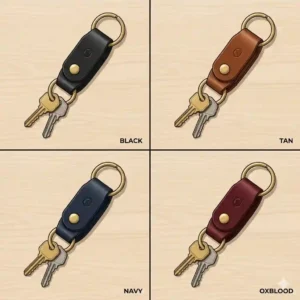
The Break-In Period: Practical Usage & Patina Guide
A high-quality leather keychain holder is one of the few products that actually gets better after you buy it. However, the first 30 days are crucial. New leather, especially full-grain vegetable-tanned hides, can be remarkably stiff.
Step-by-Step Setup and Optimization
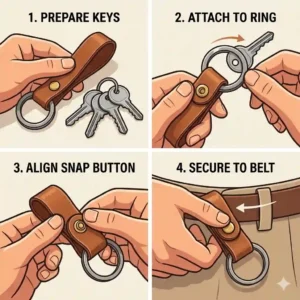
When you first insert your keys, do not over-tighten screw posts. I highly recommend applying a microscopic drop of blue threadlocker (like Loctite 242) to the threads of any Chicago screws used in your organizer. The natural twisting motion of deploying keys will eventually unscrew untreated metal posts, dumping your keys onto the pavement.
Accelerating the Patina Safely
You want that dark, caramel-colored patina, but you shouldn’t rush it with harsh chemicals. In my experience, the best treatment is simply natural hand oils and sunlight. If the leather feels dry upon arrival, apply a very light coat of a natural wax conditioner (like Smith’s Leather Balm).
-
Mistake to Avoid: Never soak your leather in oil. Over-conditioning will turn a rigid leather keychain holder into a floppy, lifeless rag that can no longer securely hold your keys.
Case Study: Matching Leather Types to Commuter Profiles
Every piece of EDC gear solves a specific problem. Perfect products can fail miserably if placed in the wrong environment. Let’s look at three distinct user profiles and how they should approach their purchase.
The Urban Subway Commuter
Profile: Takes the train, walks in the rain, needs rapid access to a building fob and one apartment key.
The Fit: The Bellroy Key Cover Plus is the ideal match. Why? The magnetic closure can be opened one-handed while holding a coffee, and the eco-tanned leather won’t absorb massive amounts of moisture if you get caught in a downpour. An open carabiner design like the Nomad would leave the keys exposed to rain and potential pickpockets.
The Blue-Collar Foreman
Profile: Works on job sites, handles abrasive materials, carries 5+ heavy brass keys.
The Fit: The Hide & Drink organizer is the only logical choice here. A delicate executive fob will get shredded by concrete dust and rough work gloves. The Guatemalan full-grain leather is thick enough to act as a barrier, and the solid brass hardware won’t corrode when exposed to outdoor humidity.
The Executive Professional
Profile: Wears tailored trousers, drives a modern car with a bulky smart fob, carries 2 keys.
The Fit: The Ettinger Bridle Hide matches this profile. The anti-recommendation here is the Rustico; a rugged, raw-edge wrap will snag on fine Merino wool suit pockets. The Ettinger’s burnished and painted edges slide smoothly into dress pants without ruining the drape of the fabric.
Problem → Solution: Fixing Pocket Chaos
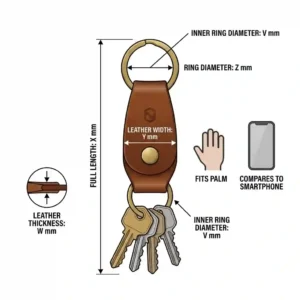
Even with a great leather keychain holder, buyers often run into a few specific friction points. Here is how to solve the most common EDC headaches.
Problem 1: The “Jingle” Effect
If your keys still rattle inside the holder, you have too much negative space.
Solution: Use micro-washers. Most hardware stores sell tiny nylon or rubber washers. Place one between each key on the internal post. This acts as a shock absorber, silencing the metal-on-metal clacking and providing a smooth, hydraulic-like pivot action when you fan the keys out.
Problem 2: Bulky Car Fobs Don’t Fit
Modern car fobs are massive and ruin the sleek profile of a minimalist holder.
Solution: External quick-release carriage. Never try to force a thick plastic fob inside the leather sleeve. Instead, utilize a quick-release titanium micro-carabiner to attach the fob to the outside D-ring of your organizer. When you drop your car off at the mechanic, you simply unclip the fob and keep your house keys.
Problem 3: Loose Pivot Screws
As mentioned, the twisting torque of using keys loosens hardware.
Solution: Aside from threadlocker, you can use a small piece of plumbers’ Teflon tape wrapped around the screw threads before tightening. It provides friction without being permanent, allowing you to easily change keys later.
How to Choose the Right Organizer
Finding the optimal leather keychain holder requires a systematic approach. You shouldn’t just buy the first one that looks good on Instagram. Here is my expert framework for evaluating a potential purchase.
-
Count Your Keys Realistically: Lay out your keys. Discard the ones you haven’t used in 6 months (looking at you, old padlock key). If your count is over 6, you need a wrap-style or post-style organizer. If it’s under 3, a sleek sleeve is better.
-
Evaluate Your Pocket Real Estate: Do you carry your phone in the same pocket? If yes, you absolutely must choose a fully enclosed design (like the Bellroy) to prevent the keys from rotating out and scratching your Gorilla Glass screen.
-
Assess the Hardware Metallurgy: Look for the words “Solid Brass,” “Stainless Steel,” or “Titanium.” If the description says “zinc alloy” or “plated metal,” walk away. Zinc snaps under cold weather stress.
-
Check the Edge Finishing: Unfinished, raw leather edges will fray and leave “fuzz” in your pockets. Look for edges that are described as “burnished,” “painted,” or “edge-dyed.” This seals the leather fibers and vastly increases the lifespan of the item.
Full-Grain vs. Top-Grain vs. Genuine Leather Alternatives
To truly understand what you are buying, we need to talk about the dermis of a cow. The terminology used in the leather industry is intentionally confusing.
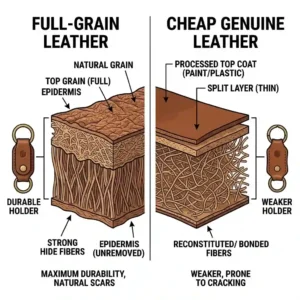
“Genuine leather” sounds premium, but it is actually one of the lowest grades available. It simply means the material technically came from an animal, but it is usually the fibrous leftovers sanded down and painted with polyurethane. A leather keychain holder made of genuine leather will crack and peel at the fold points within six months.
Full-grain leather is the gold standard. It contains the outermost layer of the hide, including all the tightly packed, microscopic fibers. This is where the strength lies. It will show natural scars and bug bites from the animal’s life, which adds character. Top-grain is full-grain that has been lightly sanded to remove those imperfections. It is slightly less durable but much more uniform, making it ideal for luxury goods like the Ettinger fob.
For further reading on how leather grading affects product longevity, the Wikipedia article on Leather provides an excellent breakdown of the tanning and grading process.
What to Expect: Real-World Durability & Pocket Wear
Specs on a page are static; pocket wear is dynamic. When you carry a leather keychain holder daily, it is exposed to an incredibly hostile environment: the human pocket. It faces friction from walking, exposure to sweat (which contains corrosive salt), and temperature fluctuations.
In the first three months, vegetable-tanned leather will undergo an “ugly duckling” phase. Scuffs will appear highly visible, and the color may look uneven as it absorbs oils primarily from your thumb and index finger. Don’t panic. This is normal.
Around the six-month mark, the magic happens. The edges will smooth out (a process called self-burnishing), and the micro-scuffs will blend into a rich, unified patina. The hardware, if it is solid brass, will begin to oxidize, turning from a bright, flashy yellow to a subdued, antique brown. This evolution is exactly why we choose leather over nylon or silicone.
Common Mistakes When Buying Minimalist Carry Gear
The EDC community is prone to falling for marketing hype. Here are the pitfalls I see buyers make constantly.
-
Ignoring the “Pinch and Twist” Test: Many buyers only think about how the keys sit when stored. But how hard is it to pinch a key and twist it in a stiff lock? If the holder is too wide, it obstructs your fingers, reducing your torque. Always look for a tapered design near the hardware pivot point.
-
The Smart Fob Miscalculation: Buyers assume their giant Honda or Ford key fob will fit on the internal post of an organizer. It won’t. The hole diameter on car fobs is almost always too small for standard Chicago screws, and the plastic housing is too thick.
-
Falling for “Tactical” Gimmicks: A leather keychain holder doesn’t need a built-in bottle opener, hex wrench, and glass breaker. Incorporating these sharp, rigid tools into a flexible leather chassis usually ruins the structural integrity of the leather and makes the tool uncomfortable in the pocket. Keep it simple.
Features That Actually Matter (And Those That Don’t)
When auditing a product listing, you need to filter the signal from the noise.
Features that MATTER:
-
Stitching Thread Quality: If the maker lists “bonded nylon” or “Dacron” thread, that is a massive green flag. Cotton thread rots when exposed to pocket sweat.
-
Hardware Sourcing: Brands that brag about their hardware (e.g., “YKK snaps,” “Horween leather”) usually make superior products because they are transparent about their supply chain.
-
Anti-Loosening Washers: Included rubber or wave washers are critical for keeping keys tight.
Features that DON’T matter:
-
“RFID Blocking”: Unless you are putting a credit card in your key wrap, RFID blocking is an unnecessary foil layer that just makes the leather stiff and crinkly. House keys don’t transmit RFID.
-
“Waterproof Leather”: No natural leather is truly waterproof. If it is, it’s covered in so much plastic coating that you lose the benefits of leather entirely. Look for water-resistant finishes instead. The National Institute of Standards and Technology (NIST) has extensively studied materials engineering, confirming that highly breathable materials naturally sacrifice absolute impermeability.
Long-Term Cost & Maintenance
Let’s calculate the Total Cost of Ownership (TCO). A cheap $10 zinc-and-genuine-leather organizer will break twice a year. Over five years, you’ve spent $100 and dealt with the frustration of dropped keys ten times.
A premium $50 leather keychain holder made of full-grain hide will easily last a decade. The only maintenance required is a $10 tin of leather conditioner, applied twice a year. To condition properly, remove all keys and hardware. Take a pea-sized amount of conditioner on a clean microfiber cloth, rub it into the leather in circular motions, and let it absorb overnight. Buff off any excess in the morning.
The hardware might need occasional tightening, and perhaps the brass needs a quick polish if you prefer it shiny, but the structural integrity will only increase as the leather fibers compress and conform to your keys. By investing slightly more upfront, your cost-per-use drops to fractions of a penny.
✨ Don’t Miss These Exclusive Deals!
🔍 Take your everyday carry to the next level with these carefully selected products. Click on any highlighted item to check current pricing and availability. These tools will help you create an authentic setup your family will love!
Conclusion
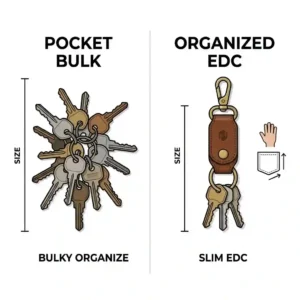
Upgrading to a high-quality leather keychain holder is one of the most satisfying micro-adjustments you can make to your daily routine. It eliminates the chaotic jingle of loose keys, protects your expensive pocket electronics from deep scratches, and adds a touch of deliberate craftsmanship to your everyday carry.
Whether you opt for the tech-friendly minimalism of the Bellroy, the rugged, heirloom-quality thickness of the Hide & Drink, or the bespoke executive finish of the Ettinger, the key is matching the leather type and hardware to your specific lifestyle. Remember to avoid “genuine leather,” look for solid brass or stainless steel hardware, and embrace the break-in period. A good leather piece is a living material—it will absorb the story of your daily life, developing a patina that is uniquely yours. Choose wisely, set it up with care, and enjoy the silence in your pockets.
FAQs
❓ What is the best way to clean a leather keychain holder?
✅ Use a slightly damp cloth with mild saddle soap to wipe away surface grime. Never submerge it in water. Afterward, let it air dry completely away from direct heat sources, then apply a light wax-based leather conditioner to restore the natural oils…
❓ Can a leather keychain holder ruin my car’s ignition?
✅ No, the leather itself is too light to damage the ignition cylinder. However, loading it with 15 heavy brass keys can create excess hanging weight, which over time can prematurely wear out older mechanical vehicle ignitions…
❓ Does vegetable-tanned leather bleed color onto clothes?
✅ High-quality veg-tan rarely bleeds, but heavily dyed leathers (like deep reds or blacks) can experience “crocking” (color transfer) during the first few weeks if they get wet and rub against light-colored fabrics like khakis…
❓ How do I stop the screws from loosening over time?
✅ The absolute best method is applying a tiny drop of blue threadlocker (removable formula) to the screw threads during your initial setup. Plumbers’ Teflon tape or a dab of clear nail polish also works in a pinch…
❓ Why does my new leather organizer feel so stiff?
✅ Full-grain leather contains tightly packed natural fibers. It requires mechanical agitation (bending, carrying, using) and the natural oils from your hands to break those fibers in. Expect a 2-to-4 week break-in period for optimal flexibility…
Recommended for You
- 5 Best Belt Key Holder Options for 2026: Expert EDC Field Test & Review
- Top 5 Belt Loop Key Holder Reviews for 2026: An Expert’s Guide
- 5 Best Belt Loop Keychain Options for Secure EDC (2026 Expert Review)
Disclaimer: This article contains affiliate links. As an Amazon Associate, I earn from qualifying purchases. If you purchase products through these links, we may earn a small commission at no additional cost to you.
✨ Found this helpful? Share it with your friends! 💬🤗
[addtoany]
