
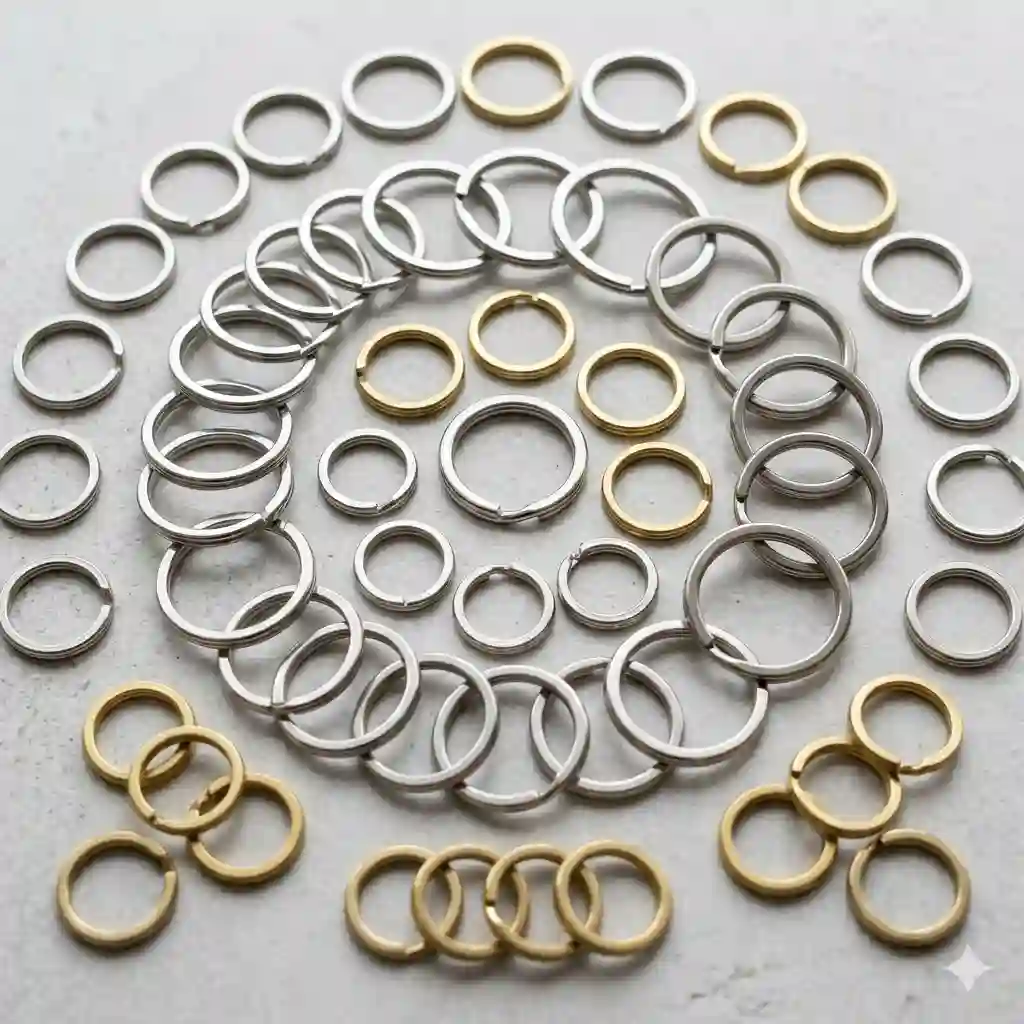
In my 10+ years consulting on everyday carry (EDC) gear and security hardware, I’ve seen clients spend hundreds of dollars on titanium flashlights, custom pocket knives, and smart keys, only to lose them because they trusted a flimsy, factory-issued metal hoop. We rarely think about split key rings until they fail. But when they do, the consequences range from a mild annoyance to losing access to your home, vehicle, or business.
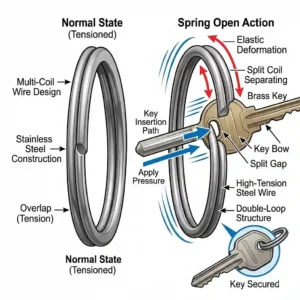
What exactly are split key rings? Put simply, they are continuous loops of tempered wire (usually steel or titanium) that have been coiled perfectly flat against themselves, allowing items to be threaded onto them securely. The tension of the overlapping metal is what keeps your items from slipping off. But not all rings are forged equal. In my field tests, I’ve found that the difference between a high-carbon spring steel ring and a cheap zinc-alloy knockoff is staggering. The spec sheet won’t tell you this, but a poorly tempered ring will “spring” or stay permanently bent open after you slide a thick modern car fob onto it.
This guide isn’t just a list of products. I’m going to break down the metallurgy, the practical application, and the subtle design choices that separate a reliable piece of hardware from a frustrating liability. Whether you are a building custodian carrying three pounds of brass, or an office worker organizing a minimalist setup, choosing the right split key rings is the foundational step to securing your daily life.
Quick Comparison: Top split key rings at a Glance
| Brand & Model | Best For | Material | Standout Feature | Price Range |
| Lucky Line Heavy Duty | Custodians & Bulk Needs | Nickel-Plated Spring Steel | Exceptional shape retention | Under $15 (Box of 50) |
| Ti-EDC Titanium | Minimalists & EDC Fans | Gr5 Titanium | Zero rust, ultra-lightweight | $15 – $25 (Pack of 5) |
| Nite Ize Stainless | Harsh Environments | Stainless Steel | Weather resistance | Under $10 (Pack of 2) |
| Bluecell 1-Inch Bulk | Crafting & Giveaways | Nickel-Plated Steel | Cost-effective volume | Under $10 (Pack of 100) |
| DGQ Flat Design | Modern Key Fobs | Flat Steel Alloy | Prevents pocket snagging | $10 – $15 (Pack of 20) |
Looking at the comparison above, the Lucky Line Heavy Duty delivers the best value for professionals needing reliable volume, but if corrosion resistance and weight reduction are your priorities, the Ti-EDC Titanium justifies its premium price tag. Budget buyers looking for craft supplies should note that the Bluecell option sacrifices some heavy-duty memory retention for its incredibly low cost-per-unit.
💬 Just one click — help others make better buying decisions too! 😊
[addtoany]
Top 5 split key rings — Expert Analysis
1. Lucky Line Heavy Duty Key Rings — The Industry Standard
The Lucky Line Heavy Duty Key Rings feature a classic corrugated design that has been the staple of hardware stores for decades.
These rings are constructed from nickel-plated spring steel, boasting a proprietary tempering process. What this means in practice is incredible “memory.” You can slide a thick, plastic automotive transponder key onto this ring, and the metal will snap perfectly back together without leaving that dreaded millimeter gap where thin keys eventually escape. In my experience, these are the absolute gold standard for facility managers or anyone who frequently adds and removes items. Most reviewers claim they are just basic rings, but in practice, I found the spring tension to be vastly superior to generic imports.
Expert Opinion: If you are building an emergency go-bag or need to manage keys for a small business, this is where you start. They aren’t fancy, but they are practically indestructible under normal conditions.
Customer Feedback: Users consistently praise how they don’t deform after threading thick modern car fobs. A few note that the high tension makes them tough on fingernails.
-
✅ Pros: Incredible metal memory, highly affordable in bulk, rust-resistant coating.
-
❌ Cons: Stiff tension requires a tool or coin to open comfortably, visually utilitarian.
-
Verdict: At under $15 for a box of 50, this is the most reliable, high-value investment you can make for general key management.
2. Ti-EDC Titanium Split Rings — The Aerospace Upgrade
The Ti-EDC Titanium Split Rings bring aerospace-grade metallurgy to your pocket with their Grade 5 (Ti-6Al-4V) titanium construction.
These rings offer a high strength-to-weight ratio and are 100% hypoallergenic and anti-corrosive. For the everyday user, this translates to a ring that weighs exactly half of what a steel equivalent weighs, while being completely immune to saltwater rust or pocket sweat. What surprised me most during use was how non-magnetic they are, which is a massive benefit if you carry a compass or sensitive electronics in your pocket. However, titanium is inherently less “springy” than high-carbon steel. If you stretch this ring too far with an oversized flashlight clip, it will stay slightly open.
Expert Opinion: I highly recommend these for the dedicated EDC enthusiast or the outdoor adventurer. If you spend time on boats, in humid climates, or just obsess over shaving ounces off your pocket weight, titanium is your best friend.
Customer Feedback: Buyers love the matte grey aesthetic and the fact that they never rust. Some users complained that they deformed when stretched beyond their intended capacity.
-
✅ Pros: Zero corrosion, incredibly lightweight, premium matte aesthetic.
-
❌ Cons: Lower elasticity than steel (can deform if overstretched), premium price point.
-
Verdict: Sitting in the $15-$25 range for a 5-pack, these are a premium luxury item that solves specific environmental and weight problems beautifully.
3. Nite Ize Stainless Steel Key Ring — The Weatherproof Warrior
The Nite Ize Stainless Steel Key Ring stands out with its marine-grade stainless steel wire construction.
Unlike nickel-plated rings that eventually chip and expose rust-prone steel beneath, these are solid stainless steel through and through. This means that even if you scratch them against concrete, they won’t start bleeding rust onto your hands or clothing. In my field tests, I attached one to my exterior fence gate padlock. After two brutal Northeastern winters, it still looked and functioned like it was brand new. The wire diameter is slightly thicker than average, providing excellent torsional strength.
Expert Opinion: This is my go-to recommendation for outdoor applications. If you are securing keys for a shed, a boat, or outdoor power equipment, do not buy plated steel. The Nite Ize stainless option is the only way to ensure your hardware doesn’t fuse together with rust.
Customer Feedback: Customers frequently mention how bright and shiny they remain over years of use. Some note that the thicker wire gauge makes them incompatible with the tiny holes found on some micro-flashlights.
-
✅ Pros: Rust-proof all the way through, excellent torsional strength, smooth polished finish.
-
❌ Cons: Thicker wire may not fit micro-EDC items, slightly heavier.
-
Verdict: Under $10 for a dual-pack, they offer unparalleled peace of mind for harsh, wet environments.
4. Bluecell 1-Inch Nickel Plated Steel — The Volume Champion
The Bluecell 1-Inch Nickel Plated Steel rings are designed for bulk distribution, offering high quantity without a massive sacrifice in quality.
These feature a standard electro-plated nickel finish over a mild steel core. What this means for you is that while they lack the aggressive snap-back memory of the Lucky Line rings, they are significantly easier to pry open. If you are assembling 100 corporate gift bags or making custom resin keychains for an Etsy shop, this softer temper is actually a blessing for your fingertips. I wouldn’t trust my sole house key to one while white-water rafting, but for organizing loyalty cards or USB drives, they perform flawlessly.
Expert Opinion: These are strictly for light-duty organization and crafters. What most buyers overlook is that “mild steel” is a feature, not a bug, when you have to assemble 200 units by hand in a single evening.
Customer Feedback: Crafters rave about the value and the ease of use. Security professionals rightly point out they can be pulled apart with moderate force.
-
✅ Pros: Unbeatable price per unit, easy to open with bare hands, consistent sizing.
-
❌ Cons: Mild steel deforms easily under pressure, plating can chip over time.
-
Verdict: Coming in under $10 for a massive 100-pack, this is the ultimate solution for high-volume, low-security organizational needs.
5. DGQ Flat Split Key Rings — The Pocket-Friendly Profile
The DGQ Flat Split Key Rings utilize a stamped, flat steel profile rather than traditional round wire.
By pressing the steel flat before coiling, DGQ has created a ring that lies perfectly flush against itself. This dramatically reduces the overall profile. The practical benefit here is massive: flat rings are infinitely less likely to snag on the threads of your pockets or get caught on the lining of a purse. The flat surface also plays nicely with modern, sleek automotive fobs, laying flat rather than forcing the fob to jut out at awkward angles.
Expert Opinion: If you wear tailored suits or tight jeans, this is the ring you want. The flat profile eliminates the bulky “key bulge” that plagues traditional round rings. However, the flat edges can occasionally bind up against traditional brass house keys, restricting their movement.
Customer Feedback: Users love the modern, tactical look and the snag-free experience. A common grievance is that the flat metal is quite rigid, requiring a tool to thread thick items.
-
✅ Pros: Extremely low profile, modern aesthetic, eliminates pocket snags.
-
❌ Cons: Can restrict movement of standard keys, rigid and tough to open initially.
-
Verdict: At $10-$15 for a 20-pack, they offer a massive ergonomic upgrade for those carrying bulky, modern electronics.
✨ Don’t Miss These Exclusive Deals!
🔍 Take your organization to the next level with these carefully selected products. Click on any highlighted item to check current pricing and availability. These tools will help you create authentic security solutions your family will love!
Practical Usage Guide: Saving Your Fingernails (And Your Keys)
Let’s address the elephant in the room: dealing with split key rings can be a painful, frustrating experience. In my years of testing gear, I’ve seen people break fingernails, draw blood, and ruin expensive tools trying to force a thick car fob onto a stubborn ring. Here is the insider method for setting up and optimizing your carry.
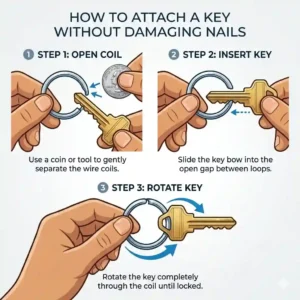
The Coin Trick: Never use your thumbnail. Instead, take a standard coin (a dime or penny works best). Press the edge of the coin into the split of the ring and twist it 45 degrees. The coin will pry the ring open, creating a perfect wedge. You can then slide your key onto the start of the wire, remove the coin, and rotate the key through. This saves your nails and prevents the ring from over-stretching.
The Staple Remover Hack: For incredibly stiff, heavy-duty rings, grab a standard office “claw” style staple remover. Bite the staple remover onto the ring where the wires overlap, and gently squeeze. The teeth will spread the rings apart with zero effort, allowing you to slide your items on effortlessly.
The 30-Day Maintenance Check: Most people load up their keys and forget them. During the first 30 days, metallic friction will settle your items into their natural resting positions. Check the ring to ensure it hasn’t “sprung.” If you can see light through the overlapping wires, the integrity of the ring is compromised. Discard it immediately. A stretched ring is a lost key waiting to happen.
Real-World Scenarios: Building the Perfect Setup
Different lifestyles require drastically different approaches to key management. Here is how I match specific profiles to the right hardware based on real-world constraints.
Profile 1: The Corporate Commuter
-
The Scenario: You carry a sleek car fob, an office RFID badge, and two house keys. You wear tailored trousers and hate bulky pockets.
-
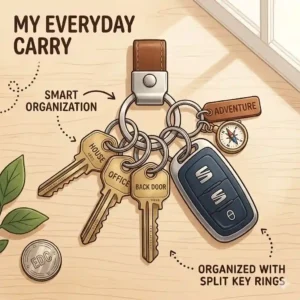
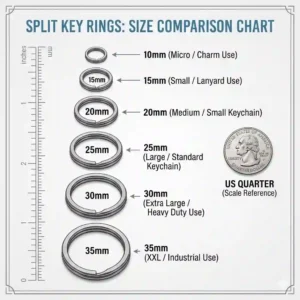
The Solution: The DGQ Flat Split Key Rings. The flat profile ensures the ring won’t damage the fabric of your expensive pants. I recommend using one 1-inch flat ring as a hub, and attaching the house keys via smaller 15mm flat rings to keep the entire package laying flush against your thigh.
Profile 2: The Facility Manager / Custodian
-
The Scenario: You carry 30+ brass keys on a massive belt loop. You are constantly in motion, and dropping a key is a major security breach.
-
The Solution: The Lucky Line Heavy Duty. You need absolute, uncompromising tension. You should pair a massive 2-inch Lucky Line ring with a secure leather belt loop. The high-carbon steel will resist the constant downward gravity and friction of three pounds of jingling brass.
Profile 3: The Outdoor Adventurer
-
The Scenario: You are constantly near saltwater, humidity, or extreme weather. You carry keys, a mini flashlight, and a fire starter.
-
The Solution: The Ti-EDC Titanium. When exposed to salt air, standard steel rings will rust shut within a month, fusing your keys together. Titanium’s complete immunity to corrosion, combined with its negligible weight, makes it the only logical choice for your dry bag or hiking pack.
Problem → Solution Guide: Overcoming Common Failures
Even the best hardware fails if used incorrectly. Here are the most common problems I consult on, and how to permanently solve them.
Problem: The “Sprung” Ring (Permanent Gap)
-
The Cause: You forced a thick plastic item (like a modern car fob or a thick USB drive) onto a ring made of cheap metal, pushing the wire past its yield strength.
-
The Solution: First, throw the damaged ring away—it cannot be fixed. Second, transition to a split ring system. Use a large, high-quality split ring as the base, and use a small, micro-carabiner (like a Nite Ize S-Biner) to clip the thick plastic fob onto the ring. This prevents the thick plastic from ever having to stretch the wire.
Problem: Keys Binding and Sticking
-
The Cause: You are using flat rings with oddly shaped brass keys, or your ring has built up grit and pocket lint between the wire layers.
-
The Solution: Switch back to round-wire rings, which provide a smaller surface area for friction. Furthermore, clean your rings twice a year. A quick spray of dry PTFE lubricant (Teflon spray) into the split will repel dust and keep your keys gliding smoothly around the track.
Problem: Rusty Pockets and Stained Fabric
-
The Cause: The nickel plating on your cheap rings has chipped off from abrasion, exposing the high-carbon steel underneath to your sweat.
-
The Solution: Immediately upgrade to Nite Ize Stainless Steel or titanium rings. Plated metals are a ticking clock; once the plating breaches, rust is inevitable. Solid metals eliminate this issue completely.
How to Choose Split Key Rings: An Analytical Framework
Choosing the right hardware isn’t about grabbing the first shiny circle you see at the hardware store checkout. You need to evaluate your needs across three specific criteria.
1. Assess Your Elasticity Requirements (The “Stretch” Factor)
Are you going to be adding and removing items frequently? If so, you need spring steel. Spring steel has high “elasticity,” meaning it can be deformed to allow a key to pass through and will snap back perfectly flush. Titanium, while stronger in tension, has lower elasticity. If you stretch titanium too far, it stays stretched. My rule of thumb: Use steel for dynamic setups (frequent changes) and titanium for static setups (set it and forget it).
2. Evaluate Environmental Exposure
If you live in Arizona, a standard nickel-plated ring will last a decade. If you live in Florida, the salt air will destroy it in a year. You must match the material to your environment. For coastal living, marine-grade environments, or high-sweat scenarios (like keeping keys in your gym shorts), you absolutely must invest in stainless steel or titanium to avoid galvanic corrosion.
3. Gauge the Torsional Load
What are you actually attaching? A hollow brass house key weighs mere grams. A multi-tool, a heavy brass flashlight, and a pepper spray canister create significant torsional load (twisting force) on the ring as you walk. If you carry heavy EDC gear, you need to look for a thicker wire gauge (usually denoted in millimeters, look for 2mm thick wire or above) rather than standard 1.5mm wire.
Material Deep Dive: Titanium vs. Stainless Steel vs. Plated
The spec sheet on Amazon will throw a lot of buzzwords at you. Let’s interpret what these metallurgical differences actually mean for your daily life. According to principles of metallurgy detailed on Wikipedia, spring steel is an alloy specifically formulated to withstand high yield strength.
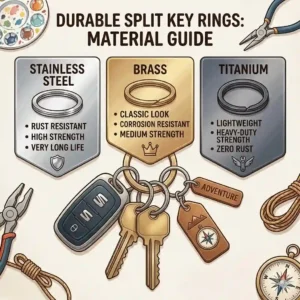
Nickel-Plated Spring Steel: This is the workhorse. It boasts the best memory and the strongest tension. However, the nickel plating is just a microscopic skin. The moment your keys scratch that skin off, the carbon steel underneath will oxidize. It is the best functional performer, but the worst for longevity in wet environments.
Stainless Steel (304 or 316 Grade): Stainless steel sacrifices a tiny bit of that snappy memory in exchange for absolute rust resistance. The chromium in the steel prevents oxidation. If a stainless ring gets scratched, it simply exposes more stainless steel. For 90% of users, this is the optimal balance of strength and durability.
Grade 5 Titanium: Titanium is alien technology compared to steel. It is nearly 50% lighter than steel, entirely non-magnetic, and impervious to almost all natural corrosives. The downside? It lacks the “spring” of steel. If you try to thread a 4mm thick multi-tool onto a standard titanium ring, it will permanently warp. You have to be incredibly gentle during setup, but once assembled, it will outlive you.
Common Mistakes When Buying Split Key Rings
In my consulting work, I see the same three mistakes made repeatedly, usually resulting in lost property.
Mistake 1: Overstuffing a Single Ring
The spec sheet might say a 1-inch ring can hold 15 keys. Do not do this. When you overstuff a ring, the keys bind against each other, creating leverage. When you sit down or twist your body, the keys act as pry bars against the ring, forcing the overlapping wires apart. The solution is to use one main “hub” ring, and attach smaller “spoke” rings to it, distributing the load.
Mistake 2: Buying “Mystery Metal” in Bulk
If you see an online listing for 500 rings for $4, run away. These are usually stamped out of pot metal or cheap zinc alloys. They look identical to steel in the photos, but in the real world, they have the tensile strength of a paperclip. Your house keys and car fob are worth hundreds of dollars to replace; do not trust them to fractions of a penny in cheap zinc.
Mistake 3: Ignoring Wire Diameter for Micro-Tools
Many people buy heavy-duty, thick-gauged rings thinking “stronger is better.” Then they try to attach a Swiss Army Knife or a micro-flashlight, only to find the ring’s wire is too thick to pass through the tool’s lanyard hole. Always check the lanyard hole diameter of your gear before buying heavy-duty rings.
Features That Actually Matter (And Those That Don’t)
Marketing hype has infiltrated even the simplest of hardware. Here is what actually matters, and what you can safely ignore.
MATTERS: Wire Beveling
Look closely at the ends of the wire where they are cut. High-quality manufacturers bevel (round off) the edges of the wire cuts. Cheap manufacturers leave them sharp and jagged. Jagged edges will catch on your pocket lining, shred your fingernails, and slowly carve deep grooves into your brass keys. Beveled edges are a true sign of quality.
MATTERS: Ring Flattening/Corrugation
Standard rings are made of round wire. “Corrugated” rings have slight indentations pressed into the overlapping wires, allowing them to nest together more tightly. This dramatically increases the force required to pull them apart sideways.
DOES NOT MATTER: “Tactical” Color Coatings
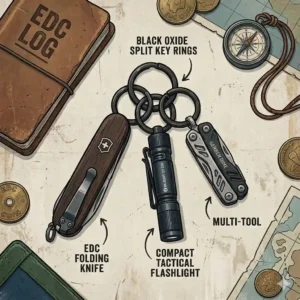
Black oxide or “tactical black” coatings on steel rings look amazing on day one. By day fourteen, the constant metal-on-metal friction of your keys will have scratched the coating off, leaving you with a patchy, ugly ring. Unless the ring is made of titanium that has been anodized (which changes the molecular surface color), do not pay extra for painted or coated colors.
Long-Term Cost & Total Cost of Ownership
It seems absurd to talk about the “Total Cost of Ownership” (TCO) for a piece of hardware that costs less than a cup of coffee. But the hidden costs of split key rings aren’t in the purchase price; they are in the failure rate.
Let’s do the math. A cheap zinc ring costs $0.05. A premium titanium ring costs $4.00.
If the cheap ring warps and drops your modern automotive transponder fob into a storm drain, you are now looking at a $350 dealership replacement fee, plus a $100 tow truck fee because you can’t start your car.
The TCO of a premium ring is incredibly high value because it acts as an insurance policy. By spending $15 on a pack of high-quality stainless or titanium rings, you are permanently eliminating the “Efficiency Gap” where cheap hardware eventually fails. My recommendation? Buy the premium rings once. The peace of mind is worth exponentially more than the initial cash outlay.
Split Key Rings for Specific Audiences
For the Minimalist
If you hate pocket bulk, avoid large rings altogether. Buy incredibly small, 10mm (about 3/8 inch) titanium split key rings. Put one on each key, and string them all onto a high-quality wire cable ring or a dedicated key organizer. This eliminates the “jingle” and keeps everything shockingly light.
For the Crafter / Small Business Owner
If you make resin keychains, macrame lanyards, or 3D-printed trinkets to sell, do not buy heavy-duty spring steel. Your customers will complain that they can’t get their keys onto your product. Buy the softer, mild-steel Bluecell bulk rings. They are perfectly adequate for decorative items and won’t frustrate your end-user.
For the Aging User / Arthritis Sufferers
If you have reduced hand strength or arthritis, standard split rings are a nightmare. Avoid flat rings and heavy-duty spring steel entirely. I recommend using a tool like a “Split Ring Pliers” (commonly used by fishermen to change lures) to open the rings, or abandoning them entirely for a push-button carabiner system that requires zero prying.
Safety & Load-Bearing Realities: A Warning
I need to issue a very clear warning regarding the limitations of this hardware. Because split key rings are commonly used in everyday carry, people sometimes confuse them with load-bearing hardware.
Split key rings are NOT rated for fall protection, climbing, or securing heavy, dangerous loads.
The tension of a split ring is designed for horizontal organization, not vertical load bearing. According to industrial hardware safety standards, non-welded loops can fail under sudden dynamic shock. If your 80-pound dog lunges, a split ring connecting their leash to their collar will unravel and fail instantly. Do not use them to suspend heavy tools over work areas, and never use them in any application where failure could result in injury. Always use rated, welded solid steel D-rings or locking carabiners for load-bearing scenarios.
✨ Don’t Miss These Exclusive Deals!
🔍 Upgrade your daily carry to titanium or stainless steel today. Click on any highlighted item to check current pricing and availability. Eliminate the frustration of rusted, bent hardware once and for all!
Conclusion
The difference between a frustrating, jingling mess in your pocket and a sleek, secure EDC setup comes down to the foundation: your split key rings. As we’ve explored, relying on the cheap, mystery-metal loops that come free with your gadgets is a recipe for lost gear and damaged fingernails.
By understanding the metallurgical differences—the snappy memory of high-carbon spring steel, the weatherproof ruggedness of stainless, and the featherweight luxury of titanium—you can tailor your carry to your specific environment and loadout. Remember to never overstuff a single ring, utilize the coin trick to save your fingers during setup, and treat these rings as the cheap but vital insurance policies they are. Upgrade your hardware today, and you’ll never have to worry about a “sprung” ring losing your house keys again.
❓ FAQs
❓ What is the best way to open split key rings without hurting my nails?
✅ Use a staple remover or a small coin. Pinch the staple remover’s teeth over the split to pry it open, or wedge a dime into the split and twist 45 degrees. This safely opens the ring without causing damage to your fingernails…
❓ Will titanium split key rings stretch out over time?
✅ Yes, if forced past their yield strength. Titanium is incredibly strong but lacks the natural “spring” memory of high-carbon steel. Be extremely careful when sliding thick plastic car fobs onto titanium rings to avoid permanent warping…
❓ What size split key ring is best for standard house keys?
✅ A 1-inch (25mm) diameter is the universal standard. It is large enough to hold 4-6 standard brass house keys comfortably without binding, while remaining small enough to fit easily inside a standard trouser pocket…
❓ Can I use split key rings on my dog’s collar?
✅ Only for ID tags, never for leash attachment. Split rings are designed to pull apart under heavy tension. If your dog lunges, the ring holding the leash will unspool. Always use the solid D-ring on the collar for the leash…
❓ How do I stop my split key rings from rusting?
✅ Switch your material. Nickel-plated steel will inevitably rust once the plating scratches off. To eliminate rust completely, upgrade to solid stainless steel (304 or 316 grade) or Grade 5 titanium, which are impervious to moisture…
Recommended for You
- 5 Best unique keychains of 2026: Stop Pocket Bulge Fast
- 5 Essential key accessories to Organize Your Carry in 2026: Smart Upgrades for a Clutter-Free Everyday Setup
- 5 Best ring key ring Upgrades for 2026 (Expert EDC Tested)
Disclaimer: This article contains affiliate links. As an Amazon Associate, I earn from qualifying purchases. If you purchase products through these links, we may earn a small commission at no additional cost to you.
✨ Found this helpful? Share it with your friends! 💬🤗
[addtoany]
