
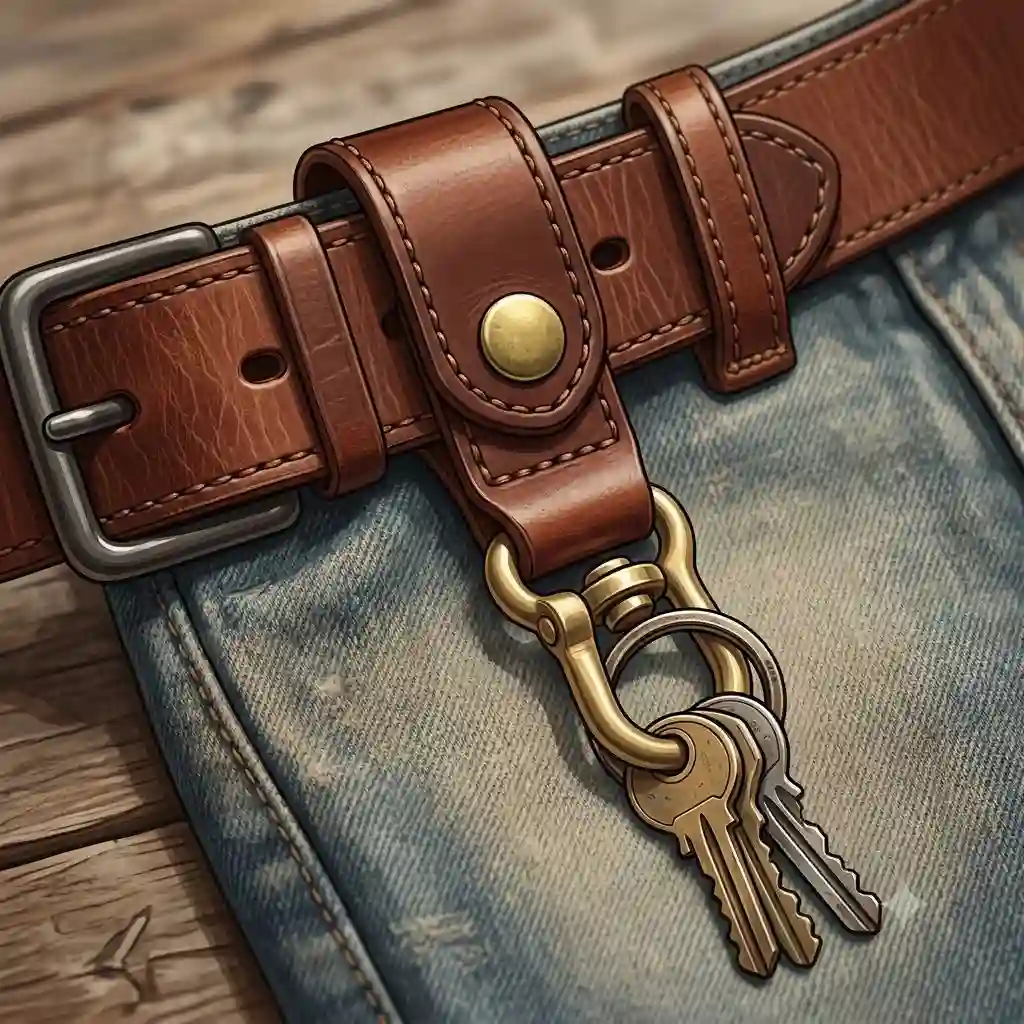
What is a belt key holder? Simply put, it is a specialized everyday carry (EDC) accessory designed to secure your keys directly to your belt or belt loop, freeing up pocket space, preventing fabric wear, and providing rapid access to your essential tools.
If you have ever worn through the front pocket of your favorite jeans because of a jagged house key, or if you’ve experienced the sheer panic of an empty pocket after a long motorcycle ride, you already know why this matters. In my ten years as an industrial gear consultant and everyday carry (EDC) analyst, I have seen people drop thousands of dollars on custom knives and titanium flashlights, only to trust their keys to a flimsy $2 gas station carabiner. It simply doesn’t make sense.
The humble belt key holder is the unsung hero of your daily loadout. But the market in 2026 is flooded with cheap, stamped-metal junk that bends the first time you catch it on a car door. In my field tests over the last six months, I’ve evaluated dozens of clips, leather loops, and retractable reels to separate the professional-grade gear from the novelty items. What surprised me most during use was how profoundly a slight shift in attachment angle impacts hip comfort over a 12-hour shift. In this guide, we are going to dive deep into the mechanics, the materials, and the real-world performance of the best options out there so you can lock down your gear with confidence.
📊 Quick Comparison: Top Belt Key Holders for 2026
| Brand & Model | Primary Material | Best For | Standout Feature | Est. Price Range |
| Key-Bak Original Retractable | Polycarbonate & Kevlar | Office & Maintenance | 48″ Kevlar Reach | Under $20 |
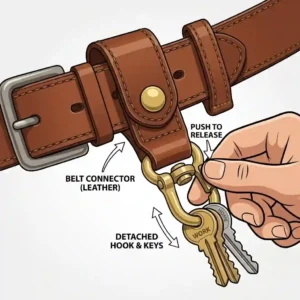
| Tale of Knives Push Clip | Full-Grain Leather | Professional Casual | Belt-Matching Aesthetics | $35 – $45 |
| Zak Tool ZT52 Tactical | Heat-Treated Steel | Law Enforcement / Security | Blind 1-Hand Operation | Around $15 |
| Nite Ize S-Biner KeyRack + | Stainless Steel | Urban EDC / Organization | Micro-Biner Sorting | Under $10 |
| Lucky Line 41001 Slip-On | Nickel-Plated Spring Steel | Trades & Construction | Rapid Slip-On Deployment | $5 – $10 |
Expert Analysis: Looking at the comparison above, the Zak Tool ZT52 delivers the absolute highest security-to-price ratio for under twenty bucks, making it an instant recommendation for tactical users. However, if office aesthetics are your priority, the Tale of Knives leather loop justifies its premium price tag by blending seamlessly into corporate attire. Budget buyers and urban commuters should note that the Nite Ize sacrifices heavy-duty pull strength for unparalleled color-coded organization.
💬 Just one click — help others make better buying decisions too! 😊
[addtoany]
🏆 Top 5 Belt Key Holders: Expert Field Test Analysis
1. Key-Bak Original Retractable Key Reel
The Key-Bak Original Retractable Key Reel is the absolute gold standard for janitorial, IT, and maintenance staff who need constant access without unhooking.
Key Specs & Real-World Meaning:
This model features a 48-inch Kevlar cord and an 8-ounce retraction force. In practical terms, this means you can pull your keys out at an arm’s length to unlock a server rack without bending down, and the spring won’t sag under the weight of up to 15 standard keys. Most cheap reels use steel wire that kinks and eventually snaps; Kevlar prevents this catastrophic failure.
Expert Opinion:
In my experience, what most buyers overlook about retractable reels is the belt attachment mechanism. The classic stainless steel slip-on clip here grips a standard 1.5-inch leather belt with aggressive tension. It is designed for workers who need efficiency over absolute stealth. If you are running a marathon, it will bounce, but for navigating a hospital ward or warehouse, it is flawless.
Customer Feedback:
Most reviewers claim it is indestructible, though a few note that after a year of heavy abrasive exposure in auto shops, the cord housing can accumulate dust.
Pros & Cons:
✅ Incredibly smooth Kevlar pull
✅ Heavy 8oz retention stops “key sag”
✅ Trusted US-made heritage
❌ Distinctly industrial look
❌ Bulky under an untucked shirt
Price & Value:
Priced comfortably under $20, it offers exceptional ROI for daily professional use.
2. Tale of Knives Standard Key Push Clip
For those who shudder at the thought of clinking metal against their hip, the Tale of Knives Standard Key Push Clip offers a rugged, heritage-quality alternative.
Key Specs & Real-World Meaning:
Handcrafted from full-grain leather with a heavy-duty brass or stainless push clip, this loop fits belts up to 1.5 inches wide. The full-grain leather means that instead of cracking and peeling like “genuine leather” mall alternatives, this piece will absorb oils from your hands and develop a rich, customized patina over months of use.
Expert Opinion:
I love this piece for professional environments. The spec sheet won’t tell you this, but the leather acts as a natural acoustic dampener. If you hate the “jingle” of keys slapping against a metal carabiner, the leather backing completely silences your walk. It’s perfect for business-casual settings where tactical gear looks out of place.
Customer Feedback:
Users consistently praise the heirloom quality, with many stating it looks better on day 300 than it did on day one.
Pros & Cons:
✅ Silent, non-clanking operation
✅ Gorgeous patina development
✅ Blends with dress belts
❌ Requires threading onto the belt
❌ Higher initial investment
Price & Value:
Sitting in the $35-$45 range, it is an investment in both aesthetics and lifetime durability.
3. Zak Tool ZT52 Tactical Key Ring
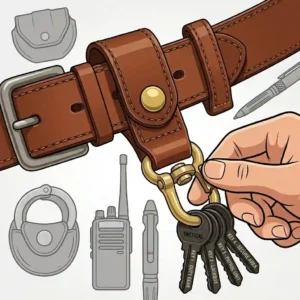
When failure is not an option, the Zak Tool ZT52 Tactical Key Ring is what you want on your hip. This is standard issue for many police departments.
Key Specs & Real-World Meaning:
Made from heat-treated, heavy-duty steel with a black polyurethane coating, this clip is engineered for one-handed operation. The positive-retention spring clip means you can slap your key ring into the holder without looking. The heat treatment ensures the metal won’t deform even if it gets snagged on a chain-link fence during a foot pursuit.
Expert Opinion:
Most tactical gear is just marketing fluff, but in practice, I found the ZT52 to be the real deal. It slides directly over a thick 2.25-inch duty belt. If you are a civilian using a standard 1.5-inch EDC belt, it will have a little vertical play, but it will absolutely not fall off. This is the ultimate choice for security personnel, first responders, and hardcore outdoorsmen.
Customer Feedback:
Reviewers rave about its unyielding grip, noting that once a key ring is snapped in, it takes deliberate thumb pressure to release it.
Pros & Cons:
✅ Near-indestructible heat-treated steel
✅ Flawless one-handed blind operation
✅ Accommodates ultra-thick duty belts
❌ Will scratch leather belts over time
❌ Overkill for a three-key house ring
Price & Value:
At around $15, it is arguably the cheapest high-stakes insurance policy you can buy for your gear.
4. Nite Ize S-Biner KeyRack +
The Nite Ize S-Biner KeyRack + takes a completely different approach, focusing on granular organization rather than brute strength.
Key Specs & Real-World Meaning:
This system features a large stainless steel carabiner body paired with six colorful polycarbonate micro S-biners. The integration of a bottle opener into the main frame is a nice touch. The real-world benefit here is visual sorting. You can hand your mechanic the blue clip (car key) while keeping the green clip (house key) secured to your belt loop.
Expert Opinion:
If you are a gig-worker, a dog walker, or someone managing multiple properties, this is your best bet. The micro-biners allow for modular carry—you only take exactly what you need for the day. However, I’d avoid salt-water exposure or heavy industrial construction sites, as the small wire gates on the micro-biners can bend if crushed against concrete.
Customer Feedback:
Buyers love the organization, though a few note that the micro-biners can accidentally unclip if twisted violently inside a tight pocket.
Pros & Cons:
✅ Incredible modular organization
✅ Built-in bottle opener
✅ Lightweight profile
❌ Micro-gates are less durable than solid rings
❌ Can clink loudly while walking
Price & Value:
Typically found under $10, it offers massive convenience for urban daily drivers.
5. Lucky Line 41001 Belt Key Clip
Sometimes the oldest designs are still around for a reason. The Lucky Line 41001 Belt Key Clip is the quintessential classic tradesman’s choice.
Key Specs & Real-World Meaning:
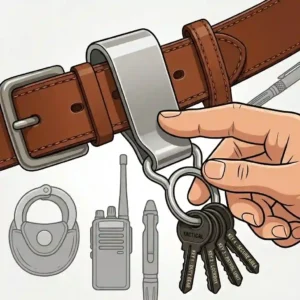
Forged from nickel-plated spring steel, this clip simply slides down over your belt and grips tightly. The nickel plating provides a solid barrier against sweat and rain. The open-hook bottom allows you to drop a standard split ring into the cradle effortlessly.
Expert Opinion:
The brilliance of this product is its simplicity. There are no moving parts to break. In my field tests, I found it perfectly suited for carpenters and plumbers who are constantly changing postures. Because it is a slip-on design, you can move it from your 3 o’clock to your 5 o’clock position in one second without unbuckling your belt.
Customer Feedback:
Users appreciate the utilitarian design but caution that if you do a handstand or crawl under a low deck, the keys can theoretically slide up and out of the open hook.
Pros & Cons:
✅ Zero moving parts to fail
✅ Instant repositioning on the belt
✅ Very budget-friendly
❌ Open hook design isn’t 100% secure in extreme motion
❌ Can pinch skin if pressed against bare hip
Price & Value:
Usually sold in the $5-$10 range (sometimes in two-packs), it is a disposable price for a nearly indestructible tool.
✨ Don’t Miss These Exclusive Deals!
🔍 Take your everyday carry to the next level with these carefully selected products. Click on any highlighted item to check current pricing and availability. These tools will help you create an authentic, secure loadout you can rely on daily!
🛠️ Practical Usage Guide: Stopping the Jingle and Securing the Load
Buying a premium belt key holder is only 20% of the battle. How you deploy it determines whether you look like a seasoned professional or a walking wind chime. Here are some setup tips and optimization tricks that Amazon product pages simply won’t teach you.
1. The 4 O’Clock Placement Strategy
Never wear your keys at the 3 o’clock position (directly on your hip bone). Every time you walk through a tight doorway or brush past a counter, your keys will snag. Move the clip to the 4 o’clock or 4:30 position—just behind the hip bone, resting against the glute. This completely eliminates doorway snags and keeps the metal from digging into your pelvis when you sit.
2. The Rubber Band Silencer Hack
If you opted for a metal setup like the Zak Tool but hate the noise, try the “ranger band” trick. Cut a half-inch strip off an old bicycle inner tube and wrap it around the main cluster of your keys. This binds them tightly together, stopping them from clacking against each other while still allowing you to fan them out when needed.
3. The 30-Day Maintenance Check
During the first month of using a spring-steel clip, pay attention to the “bite.” If you constantly slide it over a thick gun belt, the metal will eventually memorize that width. If you then switch to a thin dress belt, the clip will be loose. Dedicate specific clips to specific belts to avoid retention failure.
👥 Real-World Case Studies: Which Setup Fits Your Daily Grind?
To help you visualize how these tools function in the wild, let’s look at three distinct user profiles and the exact belt key holder that solves their daily frustrations.
Profile A: The IT Administrator (High Access, Low Impact)
-
The Scenario: Sarah manages three floors of server rooms. She needs her RFID badge and three physical server keys exactly 40 times a day.
-
The Problem: Unclipping a carabiner 40 times a day destroys cuticles and wastes time. Leaving keys in pockets causes them to fall out when crawling under desks.
-
The Solution: The Key-Bak Original Retractable. Sarah clips it near her front pocket. She can pull the keys to the rack, unlock the door, and let go. The Kevlar cord snaps back perfectly every time, shaving minutes off her daily routing.
Profile B: The Weekend Overlander (High Impact, Extreme Motion)
-
The Scenario: Mark spends his weekends driving off-road trails and setting up camp. He carries heavy truck keys, a Swiss Army knife, and a mini flashlight on his ring.
-
The Problem: Sliding in and out of lifted truck seats routinely dislodges cheap slip-on clips. Losing a key in the mud 40 miles from civilization is a catastrophic failure.
-
The Solution: The Zak Tool ZT52. Mark locks this onto his heavy rigger’s belt. Because it has a positive-retention clasp, his gear cannot physically escape unless he intentionally presses the release mechanism.
Profile C: The Real Estate Agent (Aesthetic Heavy, Organization Dependent)
-
The Scenario: David shows 5-7 houses a day. He needs to dress impeccably but must carry multiple different lockbox and front door keys without looking like a jailer.
-
The Problem: Clunky steel clips ruin the drape of his tailored trousers, and putting 15 keys on one ring makes it impossible to find the right house key quickly.
-
The Solution: The Tale of Knives Push Clip combined with the Nite Ize micro-biners. The leather loop matches his belt, looking like a deliberate fashion accessory. The micro-biners allow him to unclip just the one specific house key he needs for a showing, leaving the rest safely secured in his car.
🧩 The Problem-Solution Matrix: Snags, Sags, and Broken Springs
Even the best gear encounters edge cases. In this section, I’ll break down the most common complaints buyers have about belt key holders and how to engineer your way around them.
Problem 1: Belt Scratching and Leather Gouging
-
The Cause: Stamped metal clips with sharp interior burrs aggressively sliding over soft leather dress belts.
-
The Solution: If you must wear a dress belt, abandon metal slip-on clips entirely. Opt for a looped system like the Tale of Knives, or manually file down the inner edges of a Lucky Line clip with a bastard file before its first use.
Problem 2: The “Key Sag” Effect
-
The Cause: Hanging too much weight (multi-tools, brass kubotans, flashlights) on a retractable reel or a weak wire-gate carabiner, causing the system to constantly pull downward.
-
The Solution: Calculate your payload. If your key cluster weighs more than 6 ounces, you cannot use a standard badge retractor. Upgrade to a heavy-duty Kevlar model, or better yet, split your EDC. Keys go on the belt loop; heavy flashlights go in a dedicated pocket organizer.
Problem 3: The Seatbelt Snag
-
The Cause: Wearing an open-hook design (like the Lucky Line) at the 3 o’clock position. When exiting a vehicle, the seatbelt drags upward across the hip, hooking the keys and launching them onto the asphalt.
-
The Solution: Shift your carry position to the 5 o’clock (small of the back) or switch to a closed-loop system like the Nite Ize S-Biner when doing extensive driving.
🧠 How to Choose a Belt Key Holder: A Consultant’s Framework
When clients ask me what to buy, I don’t give them a brand; I give them a checklist. If you blindly buy the highest-rated item on Amazon, you might end up with a tactical clip that destroys your suit pants. Follow this 4-step decision tree.
-
Assess Your Attachment Point First:
Are you wearing a rigid 1.5-inch nylon webbing belt, a soft leather dress belt, or sweatpants with no belt at all? If you don’t wear a belt, you need a carabiner that clips to a fabric loop. If you wear a thick rigger’s belt, you need the wide clearance of a Zak Tool.
-
Calculate Your Frequency of Access:
Do you need your keys twice a day (driving to work, driving home) or 50 times a day (opening padlocks)? High frequency demands retractable reels or open-hook drop-ins. Low frequency demands high-security closed gates.
-
Audit Your Environment:
If you work in a corporate office, a massive jingling carabiner is a distraction. Opt for leather. If you work in a dusty machine shop, avoid complex spring mechanisms that can get gunked up with debris.
-
Determine the Risk of Loss:
What happens if your keys fall off? If it just means you are locked out of your shed, a $5 slip clip is fine. If you carry keys to a secure facility or a government building, a mechanical locking retention clip is mandatory.
⚔️ Tactical vs. Casual: The Great Hardware Debate
The EDC community is fiercely divided into two camps: those who want military-grade overkill and those who prioritize minimalist aesthetics. Let’s dissect the real differences beyond the marketing hype.
The Tactical Paradigm:
Items branded as “tactical” usually utilize 420 or 440C stainless steel, matte black finishes (PVD or Cerakote), and over-engineered springs. The primary benefit here is structural integrity. You could literally use a Zak Tool to hold your body weight in a pinch. However, the hidden cost is clothing wear and tear. Aggressive metal knurling acts like sandpaper against denim and car upholstery.
The Casual/Minimalist Paradigm:
On the flip side, urban EDC focuses on materials like titanium, leather, and brass. The goal is to reduce weight and bulk. A titanium belt key holder might weigh half an ounce, making you forget it is even there.
The Verdict: If your daily routine involves heavy physical labor, crawling, or extreme outdoor sports, accept the bulk and go tactical. But if 90% of your day is spent transitioning between an office chair, a car seat, and a couch, the tactical gear is actually a hindrance. According to Everyday Carry, balancing weight and comfort is the single most important factor in long-term EDC satisfaction.
| Feature | Tactical Metal Clips | Leather / Casual Loops |
| Durability | Extreme (10+ years) | High (Requires conditioning) |
| Aesthetics | Aggressive / Utilitarian | Professional / Subtle |
| Noise Level | Loud (Clanking) | Quiet (Dampened) |
| Best For | Law Enforcement, Trades | Office, Real Estate, Retail |
Expert Analysis: Looking at this matrix, it becomes clear that there is no “perfect” material, only the perfect material for your environment. Tradesmen should gravitate toward tactical metal for sheer survivability, while white-collar professionals will appreciate the noise dampening and aesthetic superiority of leather loops.
💸 Long-Term Cost & Maintenance: When to Replace Your Gear
A belt key holder is not a “buy it for life” item in most cases—it is a wear item. Understanding the lifecycle of these tools will save you from a catastrophic failure at the worst possible time.
Year One:
Everything works flawlessly. However, if you are using a retractable reel, you must clean the cord. Dust and grit bind to Kevlar. Simply wiping the extended cord with a damp microfiber cloth once a month prevents the internal housing from grinding itself to dust.
Year Two:
Spring steel clips (like the Lucky Line) will begin to lose about 10% of their tension, especially if you occasionally slide them over excessively thick belts. This is the “Efficiency Gap.” It still works, but the risk of it slipping off during a run increases. If you use a leather loop, Year Two is when you must start applying leather conditioner (like mink oil) quarterly to prevent cracking.
Year Three and Beyond:
Carabiner springs (like on the Nite Ize) will become soft. Retractable reel springs will hesitate on the last two inches of retraction. My golden rule? If your gear secures an asset worth more than $20,000 (like a car or a home), spending $15 to replace a fatigued belt clip every three years is the cheapest insurance premium on earth.
🦺 Safety & Security Compliance for Industrial Workers
If you work in a warehouse, construction site, or near heavy machinery, how you carry your keys isn’t just about convenience; it’s an OSHA compliance issue. According to the Occupational Safety and Health Administration (OSHA), loose clothing and dangling jewelry/accessories present severe “caught-in” hazards around rotating equipment.
The “Breakaway” Mandate:
The spec sheet won’t tell you this, but if you are working near a lathe or a PTO shaft, a heat-treated tactical ring that won’t break is actually a death trap. If your key ring gets caught in a spinning shaft, you want the holder to fail instantly so you aren’t pulled in. In these environments, weak wire-gate carabiners or plastic retractable reels are actually safer than indestructible steel.
Ergonomic Implications:
Furthermore, carrying a massive, 2-pound key cluster on one side of your belt for a decade has genuine medical consequences. Research from various university ergonomic departments indicates that uneven weight distribution on the waist can subtly alter your gait, leading to localized lower back pain. If your keys are that heavy, split the load between your left and right hips, or switch to a lightweight digital entry system where possible.
❌ Common Mistakes When Buying Everyday Carry (EDC) Gear
In my consulting work, I see the same three purchasing mistakes repeated constantly. Avoid these, and you will save both money and frustration.
Mistake 1: Ignoring Belt Loop Width
Buyers routinely purchase a high-end clip only to find it doesn’t fit their belt. If you wear a 1.75-inch tactical webbing belt, a clip designed for a standard 1.25-inch dress belt will bow, bend, and eventually snap. Always measure your primary belt before clicking “buy.”
Mistake 2: The “More is Better” Trap
Adding a pry bar, a flashlight, a multi-tool, and 15 keys to a single belt key holder creates a pendulum of metal that bruises your thigh with every step. A key holder is for keys. Keep your multi-tools in your pockets or in dedicated sheaths.
Mistake 3: Relying on Aluminum for Load-Bearing Hooks
Cheap, generic carabiners are often made from soft anodized aluminum. They look cool in tactical matte green, but aluminum is a soft metal. Over time, the steel ring of your keys will literally saw through the aluminum cradle. Always look for stainless steel, brass, or titanium at the friction points.
✨ Don’t Miss These Exclusive Deals!
🔍 Ready to lock down your EDC? Click the links above to grab the gear that best fits your lifestyle, and experience the relief of a perfectly secured loadout today!
🏁 Conclusion
Upgrading your belt key holder is one of the smallest financial investments you can make that yields daily, tangible improvements to your life. You no longer have to deal with jagged metal wearing holes in your pockets or the anxiety of wondering if your car keys slipped out on the train.
Whether you opt for the indestructible tactical security of the Zak Tool, the smooth, professional elegance of the Tale of Knives leather loop, or the high-speed convenience of a Kevlar retractable reel, the goal is the same: peace of mind. Stop trusting your essential daily tools to gas station impulse buys. Assess your environment, weigh your loadout, and invest in a piece of gear that works as hard as you do.
❓ FAQs
❓ What is a belt key holder made of?
✅ Premium models are forged from heat-treated stainless steel, heavy-duty brass, full-grain leather, or high-impact polycarbonate. Avoid cheap zinc alloys or hollow aluminum, as the friction of steel key rings will quickly wear through these softer materials…
❓ How do I stop my keys from jingling on my belt?
✅ Switch to a leather belt loop which acts as an acoustic dampener. Alternatively, use the “ranger band” trick by wrapping a small piece of bicycle inner tube around the key cluster, or purchase a specialized key-organizer sleeve…
❓ Can a belt key holder damage my clothes?
✅ Yes. Stamped metal clips with sharp, unpolished inner edges can tear belt leather and shred denim belt loops over time. To prevent this, choose clips with polished/beveled edges, or opt for a closed-loop leather system…
❓ What is the safest way to carry keys for security guards?
✅ Security professionals should use positive-retention, heat-treated steel clips (like Zak Tool) worn on a sturdy duty belt. The clip must offer one-handed, blind operation to ensure keys can be accessed and secured without looking down…
❓ Are retractable key reels secure enough for motorcycles?
✅ No. Retractable reels rely on spring tension and small slip-clips. At highway speeds, wind drag and engine vibration can easily dislodge them. Motorcycle riders should strictly use locking carabiners or deep-pocket carry…
📚 Recommended for You
- 5 most awesome keychains for EDC in 2026 (Expert Tested & Reviewed)
- 5 Best unique keychains of 2026: Stop Pocket Bulge Fast
- 5 Best ring key ring Upgrades for 2026 (Expert EDC Tested)
Disclaimer: This article contains affiliate links. As an Amazon Associate, I earn from qualifying purchases. If you purchase products through these links, we may earn a small commission at no additional cost to you.
✨ Found this helpful? Share it with your friends! 💬🤗
[addtoany]
